Tales of Humiliation

Recently, an author posted about how an up-and-coming writer’s book had failed to launch. The author claimed to be a bestselling writer, and boy, was she a scold! She was all up in her feelings about a self-published author’s debut that failed to sell many copies. Her core message was, “If only they’d done what I had done! If only she knew better!”

This demonstrates a fundamental misunderstanding some folks have about publishing books. There are too many variables outside the author’s control and no guarantees of success. You can do everything right, and still fail. In fact, trad or self-published, most books fail to find an audience. To become a bestseller in Canada, you have to sell a few thousand in a week. Less than 0.5% of the 100,000 hardcovers published each year make the New York Times Bestseller List. Novels have a spectacular failure rate (if your only metric is sales and reaching a wider readership. Some authors do not share those aspirations).

The bestseller criticizing the debut writer attributed her success to herself, her publisher, and her skill. There are many more factors than that. When people succeed, very few have the perspicacity to admit they were just plain lucky. Instead, they rationalize their genius moves after the fact.

You can optimize your chances of success, but the headwinds against you are enormous. The Netflix documentary featuring Fran Lebowitz was originally expected to air earlier than it did. Netflix put that off, and that turned into a happy accident for Lebowitz. That delay meant the show aired during the height of the pandemic. Many more people watched than otherwise would have because everyone was stuck at home.

Arrogance and ignorance can really drag an artist down.

During book promotions, many authors freely give away books to boost the store algorithms and garner more reviews. When my dentist asked about my work, I mentioned that I was running a promotion at that moment for my new book.

“You can pick it up for free right now,” I offered. Nice and generous, right?

“You’re giving it away?” His tone suggested I was making a rookie mistake in devaluing my work.

I still run into that attitude among some authors, but it’s a tried and true marketing tactic.

“Objection! Stephen King doesn’t have to do that.”

Ahem. You’re not Stephen King. Neither am I. There can be only one!

To be found, loss leaders are common and not at all shameful. It’s incredibly difficult to get people to review a novel, and harder still to sell a novel with few reviews. Many authors decide to give to get to increase their long-term sales. There are other approaches, but this is far from outlandish. Give a few hundred, and potentially gain a few thousand new readers and maybe a couple of dozen fresh reviews. Simple marketing, right? (It is, I’m not really asking.)

It gets worse.

On a Zoom call with fellow alums from my university, I discovered how I’d stumbled into a rather insulated clique. First, one woman didn’t believe I had attended our alma mater at all. “I don’t recognize you,” she said. It was a challenge. Amazing how casual some folks are about making an enemy for life, huh?

We attended a small university, but I wasn’t one of the cool kids. I recognized her from the cafeteria, but saying so would have made me feel even more inconsequential. She was active in clubs, at the bar, and getting lots of pictures of herself with friends she would keep for life. I was up in my dorm room reading and happy.

(Stay tuned. My humiliation continues below the graphic)

All that content solitude in university was one reason I got to do this:


mybook.to/TheEndemicExperience

It got worse.

On the same Zoom, an old friend said he had picked up Endemic for free. The other people on the call laughed at me. The friend asked if giving away books was worth it. In that moment, it sure wasn’t. I was in the wrong group, talking to the wrong people. Hurt feelings aside, I’ve never put hurt feelings aside.

Whatever you’re choices, there will be people who don’t know your journey, but they are certain you are doing it wrong. Don’t just agree to disagree. Disagree to disagree. Keep going, and do you, Boo.


Weekend Reads: Embracing Literature for Escape

Coffee and a book or two are great ways to start a Sunday morning. I’ve found my escape from the news, at least for a little while.

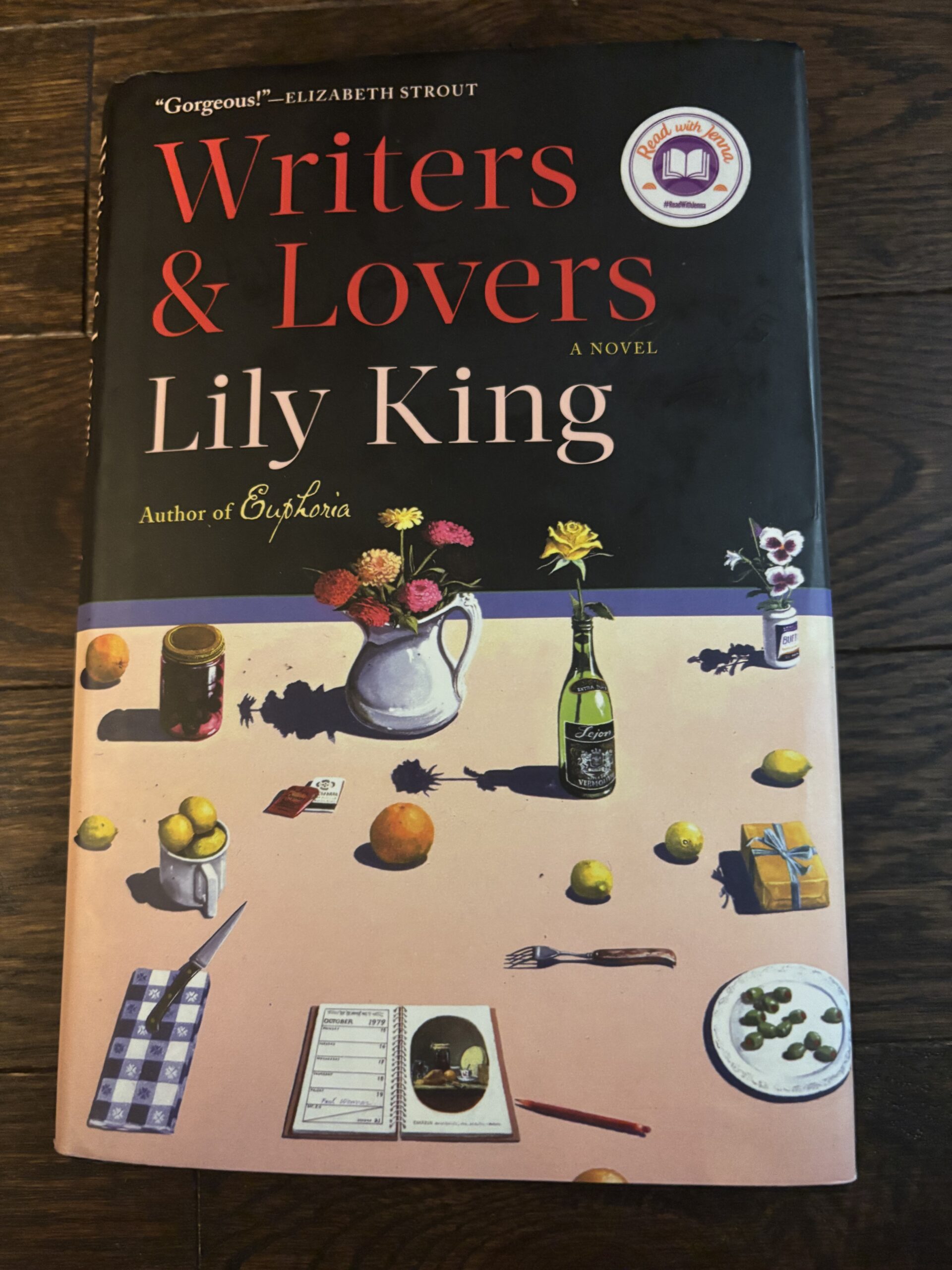
I just got these this morning, and I already know Writers and Lovers is a binge-read.

Sunday Morning, back home in Nova Scotia

When we weren’t arguing about whether I should be imprisoned in the car and taken to church, Sunday mornings used to be magical. Sunday mornings meant listening to CBC’s Sunday Morning and Dad cooking up a hunter’s breakfast. The theme music was “English Country Garden,” a very civilized and incongruous opening for a series of radio reports about the state of the world. My clearest memory of the show comes from November 1978. I know the date because it was when I first heard the gritty details of the Jonestown massacre. Many years later on the same program, they read a letter I wrote on air. It was an ode to my beloved journalism prof, Walter Stewart, upon his death. Read the second paragraph under Early Life and Career on his Wikipedia page, and you’ll understand why I loved him.

Sunday morning: today.

This morning, I awoke to news of rebels capturing Damascus and Bashar al-Assad fleeing to parts unknown. I had to shovel the end of the driveway again because the plows came through. That done, I headed out as CBC reported on the abuse of First Nations people by police. As I drove home from the bookstore, the cantankerous and fun Fran Lebowitz was interviewed. “English Country Garden” is long gone, but the journalistic standards remain.

I was once a journalist and columnist. Now, when I get a weekend newspaper, I skim the news and head for the Books section. I wonder if I’ll pay so much attention to politics and world affairs for the next couple of years. I love to be informed, but I write fiction. It occurs to me that many of my happiest times were when I retreated into the safety of books.

Books are Milestones of Nostalgia

One Christmas, when all I wanted was a train set, I was sick. I went to bed with a tall canister of Smarties and read Chitty Chitty Bang Bang by Ian Fleming. Later, I would read all the James Bond books. They had so little to do with the movies I loved, but I loved the books no less.

University was me putting off toiling in the workforce for four years. It meant hiding in my dorm and reading In Cold Blood and Portrait of the Artist as a Young Man. Once I graduated, I moved to Toronto to work in publishing. I was selling American Psycho and arguing with my bosses about censorship (Them: for; Me: Against).

I ate up Bright Lights, Big City, and related to the story so hard. On a summer night on the 28th floor of my apartment building in downtown Toronto, I devoured my favorite novel, The Color of Light by William Goldman. When I realized he had fooled me again, right down to the last line, I threw the book across the room, partly in exaltation, partly in admiration.

Chase the Cozy

Losing oneself to a novel, there is a coziness that feels like sitting by a crackling fire as a storm rages, a storm you don’t have to face. If you have the privilege of ignoring the violence and disappointments of current events, even for a little while, cherish it.

I encourage you to check out my books and retreat into fictional worlds for some solace. There are plenty of links to your right.

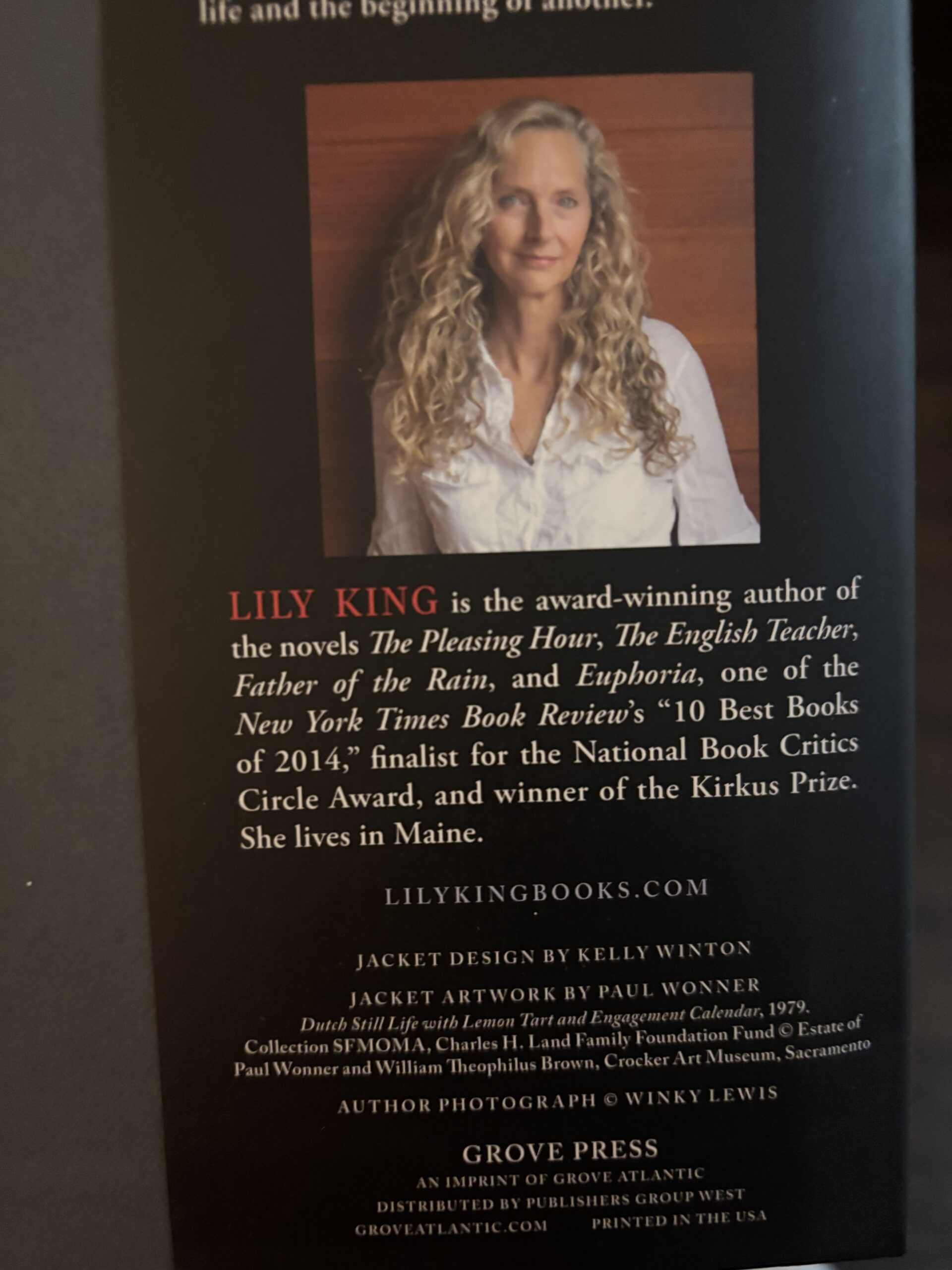
Failing that, here’s a link to Lily King’s Writers and Lovers. Think of it as Portrait of the Artist as a Young Woman. I’m only 30 pages in, and it’s delightful.

Endemic: A Survival Story of Strength and Identity

Endemic is an apocalyptic novel, but what is it really about?

Ovid Fairweather is a survivor in what remains of New York after the fall of civilization. A pandemic has killed billions worldwide. Many of those who survived their infection have reduced mental capacity. Marauders swarm the city hunting for Ovid because she has a secret garden and survival skills.

That description only addresses the plot, not the theme.

Many apocalyptic scenarios can be shallow. I’m not interested in watching a hyper-prepared former soldier mow down rivals for supplies. I initially enjoyed The Walking Dead, but the story lines became too repetitive and the tone too relentlessly grim, devoid of any humor.

All the protagonists in my books are underdogs. Ovid isn’t a soldier. She’s a bookworm. She’s intelligent, socially awkward, asexual, and on the spectrum. She could flee to the relative safety of her father’s farm in Maine, but her dad doesn’t understand her. She’s too stubborn to leave New York, and doesn’t want to deal with him.

That struggle with her father is where the theme of Endemic emerged.

Through adversity, Ovid grows stronger. Forced out of her shell by circumstance, she helps others. She’s been a nail all her life. The complications she faces will make her a hammer. Eventually, she’s destined to become a queen.

Ovid changes and improves, but in the end, she remains true to herself. She does not flee to safety. She stays to lead and to protect her found family. In the final analysis, Endemic is an action-adventure novel about how gradually people change and how they don’t.

http://mybook.to/TheEndemicExperience

And now it’s time for more coffee and a book.

When Justice Fails, Molly Won’t

When people ask me where I get my ideas, I have to say, “All around me.” From my impatience in long lines at the grocery store to my anger at an unjust world, there’s plenty to spur my bitter imagination.

Vengeance Is Hers is the origin story for a vigilante. Molly Jergins sees a fellow student at her high school assaulted. The bully receives no real consequences. Molly launches a one-woman campaign get the bully and his awful family banished from Poeticule Bay, Maine. She’s only in high school, but Molly has found her life’s calling.

The novel is about Good versus Evil and where the line between the two blurs. It’s about growing up in a town too small for your big dreams. I also include a lot of ideas on how to get back at people who deserve your wrath.

The manuscript is with the editor. We’ll do three rounds of edits and polishing, plus the excellent work of beta readers. Launching in early 2025! Please stand by!

I repeat: This is not an instruction book! But….

Okay, yes, you can expect a lot of clever ideas of how to exact vengeance upon your many, many enemies. Where do I get those strategies? Mostly from my imagination. A woman on TikTok gave me an idea about how to best plague an enemy with the stench of sour milk. Listening to The Daily Zeitgeist podcast gave me some fresh fun on the helpful dangers of bouncy castles. I thank those influences in the Acknowledgments section at the back of the book.

Mostly, I think a lot about the people who have wronged me or someone else and contemplate what might be a useful weapon I could pick up at any hardware store. You will, too. It’s fun fiction

Vengeance Is Hers is still in the editing process. If you can’t wait for an excellent story of vigilante justice, read The Night Man now.

The Night Man cover

Easy Jack isn’t a bad guy, but to survive, he will have to act like one.

“You’re guaranteed a mighty fine read.” ~ Claude Bouchard, USA Today Bestselling author of the Vigilante Series.

From the author of the Hit Man Series comes a new killer thriller.

Returning home after serving his country, Ernest “Easy” Jack hoped his family’s reputation had been forgotten. No such luck in Lake Orion. Small towns have long memories. Grudges run deep. Worse, his high school sweetheart is trapped in an abusive marriage. Family bonds, love and loyalty will be tested when a sociopathic billionaire and a dirty cop conspire to use Easy in a deadly bomb plot.

Escape is unlikely. Easy’s odds are not even.

Vengeance is Hers: A Gripping Tale of Vigilante Justice

COMING IN EARLY 2025!


If you can’t forgive and forget, what’s next?

When a fellow student is attacked and run out of town, police and the school administration in Poeticule Bay, Maine prove useless. Enraged, Molly Jergins launches a campaign of vigilante justice against the school bully. 

As threats and vandalism escalate to a war ending in death, the line between right and wrong blur. Molly tries to be good, but when hunting monsters, she will be safer if she becomes a better monster.

Revenge is the best success.

Robert Chazz Chute is a former crime and science journalist for newspapers and magazines. A graduate of the University of King’s College and the Banff Publishing Workshop, Robert has won fifteen awards for his writing. He pens suspenseful crime fiction with muscle and apocalyptic tales with heart. His hidden headquarters is a blanket fort in Other London. Vengeance is Hers is his twenty-ninth book. 

How to Add Value to Novels

In my previous post, I discussed replay value as it applies to novels. What else can we do to delight, entertain, and enchant readers?

I have a couple of ideas to excite readers.

My first suggestion is so dead easy, you’ll wonder why you haven’t done it already! In the back matter of your novel, include a list of questions to stimulate discussion. For whom? For book clubs, of course!

In Vengeance Is Hers, I added a list of questions to get book clubbers talking and possibly arguing. The hardest part of getting a book club on track is keeping everyone on task, reading the books, and not devolving into a wine club. (There is nothing wrong with wine clubs, but I’m talking about getting more readers on board.) Make it easy for book club organizers to choose your novel for their next read. When everything else is in order, this is an easy add-on.

The second enhancement is harder to do and not always scalable, but it would entice more readers.

If you’ve spent any time on TikTok’s Booktok, you’ve seen videos of books with spray-painted edges. Some of them are really beautiful. I love gilded edges. Some edges continue or are consistent with the jacket design.

If you have an artistic streak with a paintbrush, you could elevate your game by decorating the edges and shipping special editions directly. There are other options, like using stickers. Most authors will probably try the DIY approach.

A quick Google search reveals a bunch of companies that will pretty up your edges for you. The first time I heard of this, the author added to the print specs so the printer could add edge art or messages. For direct shipping special editions, selling on Etsy, or to enhance your in-person sales, I see the value in artful edges.

Want more on this? Here’s a place to start:

Write Drunk, Edit Slightly Tipsy, Wow the Fans

Hemingway said, “Write drunk, edit sober.” I say, stop being such a chicken. Take more risks.

In my fiction, I look for opportunities to do innovative and unexpected things. The chapter titles to This Plague of Days trilogy aren’t just numbers. Go to the table of contents, and the chapters form an epic poem that hints at the complex events across the narrative. Is that weird? I don’t care if it’s weird. The clues to the story are there, but it’s actually more fun for the reader to go back to read that poem again after they’ve completed the trilogy. They’ll gain a deeper understanding once they’ve read the story. (In gaming, they call that replay value.)

In my new thriller, every chapter title is one word that ends in -ion, and relates to what’s happening in that chapter. For instance, instead of Copyright, Table of Contents, and About the Author, you get Notification, Configuration, and Confession, respectively. (And yes, there really are that many useful words with the -ion suffix.)

Some publishers would clutch their pearls at such deviations from the norm. Who cares? I am the helmsman on this voyage, and I say we skip the Panama Canal and risk the storms around the Cape of Good Hope. No one remembers a voyage over calm seas.

Have you got anything besides title tricks, Rob?


Sure. Proper editing ensures that we communicate well and do not confuse readers in our efforts to entertain them. I’m not getting in the way of that, but I will deliver the unexpected. Editors make prose clear, not safe. Who said it was supposed to be safe? To quote another sage of our age, Captain James Tiberius Kirk insisted, “Risk is our business.” Put another way: Let’s be interesting. Resurrect old idioms. Come up with new idioms. Experiment with expressions that have never existed in real life. (Not yet, anyway. I’m hoping some of my innovations catch on.)

I look at Papa’s advice with the same dim view as, “Kill your darlings.” That mindset done too broadly will eliminate your most clever stuff. Inside jokes can be okay. That’s the writer writing for themselves and the die-hard fans. As long as you don’t disappear up your own metaphorical butt, it works a treat. “Works a treat” is a dated British expression some beta reads would flag. Leave it in. They are readers, so assume they’re smarter than stale toast. Trust them to pick up context clues. Free yourselves! Break the rusty chains of the Olde Gods!

Readers who aren’t in the know will skip right by sub-references.

In 1985, I met with the great science fiction writer Spider Robinson. I was a fan, but I hadn’t read all of his stuff yet. He sat me down over coffee and spoke of his origins as a writer. He looked very serious as he opined something like, “I was on my bed, naked, with some good tunes on the stereo, a drink in one hand, some hash in the other, and a book in my lap. It occurred to me that I was bored.” So Spider decided to write his own novels instead of just reading them.

Only after I read more of his work did I run across those words in one of his novels. I didn’t know it at the time, but he was quoting himself. Good on him. When you’ve got good words, don’t give the same speech once.

On Black Friday, I visited Villains, the companion shop to Heroes, the best comics shop in Other London. I bypassed the men-in-tights stuff of my youth and went straight to the indie publishers’ offerings. On the hunt for fresh and interesting stories, I found them. Think in terms of Harvey Pekar’s American Splendor. Or lush watercolors without a single line of dialogue that still tells a story. I’m a fan of Iron Man, but you can’t say Marvel and DC are taking risks. Their products are dependable, but you won’t experience many new flavors.

Writers, take risks. Readers, please indulge us. We’ll make it more fun for both of us.

Now about those pictures

Last night, I could not sleep. With an appointment to get to this morning, I decided to do battle the snowstorm. The first snowfall has always been a tentative thing, a warning of what’s to come. It’s Motherhumping Nature asking, “Have you got your snow tires yet? Did you remember to pull the snow shovels from the shed?” (Yes, to the first question, negatory on the second, dammit.) No mere warning this time, though. Got a big dump of snow that is still pummeling us as I write this.

At 4:45 a.m., I was out there slinging it, testing my new hip. Worked fine and barely raised my heart rate. I shoveled about a foot of snow. By the time I was done that and had cleaned off the car, I had to shovel again. Dug a fresh six inches at 8:45 a.m. Saints preserve us, winter is here. I prefer palm trees, but I do like how quiet the landscape becomes once the sharp edges and hard surfaces are soundproofed under a thick blanket of snow.

And when it gets very cold — Moon cold — the snow squeaks underfoot. Of course, by then, I’m afraid to go outside and hide in my blanket fort, writing the next novel.