Last week, She Who Must Be Obeyed toured southern France with Business Daughter on a celebration trip. Meanwhile, I had a stay-at-home writing retreat. (I often started each day flailing at my keyboard with gusto at a local cafe, but same, same.) I also perfected a yogurt cheesecake that would blow your mind.
Besides the cheesecake, steaming the carpets, and cleaning the house, I made substantial progress with my next novel. I’ve been reading a lot of forensic psychology to enhance the plot, plot twists, and verisimilitude. More on that in the future.
During my retreat, I took a break from my Vocab Menace video series. I enjoy these quick little video essays so much, I figured it was time for another VM roundup!*
*Note the rare use of that exclamation point to underline my sincere excitement.
Today’s video:
Here’s the latest group of videos from my Substack, also available on my YouTube channel. (Scroll down the blog for an earlier list of Vocab Menace video essays.)
If you’ve enjoyed my latest release, Vengeance Is Hers, please consider reviewing it on Goodreads and Amazon. That vigilante justice needs more love and attention. Thanks again.
When I started my Vocab Menace series, the idea was to find fun words, define them, and challenge viewers to slip those exotic or rarely used words into casual conversation.
I don’t know how many people are actually making that attempt, but I do enjoy finding these words. We use words to tell a story, but the stories behind the words are often interesting, too.
Some folks are concerned we are losing words or adding silly ones. Remember the furor over the elimination of the distinction between regardless and irregardless? I know that sticks in some people’s craws, but language is constantly evolving. It’s an organic thing that can grow in unexpected ways. You can resist, but you may as well try to empty the ocean with a sieve.
We could try to freeze our level of communication at some arbitrary stage, I suppose. With enough teaching, torture, and torment, we could all speak as if we are upperclass eighteenth-century Brits. I doubt that would fly, though.
Some lovers of the English language would clutch their pearls and retreat to their fainting couches if they knew the truth. Most newspapers are written at the sixth-grade level. That’s not a disaster. It’s meeting and reaching more readers where they are.
I am a word nerd, but I don’t beat readers over the head with my research (at least in my novels, I don’t). However, I must admit, I loved using Latin phrases in This Plague of Days.I made it work by translating said phrases and aphorisms. There was never any doubt what was meant and the use of a bit of Latin was integral to the protagonist’s character development. Jaimie Spencer is a selective mute on the spectrum with a special interest in his dictionary. When the world ends, Jaimie finds comfort in the old wisdom of Latin words.
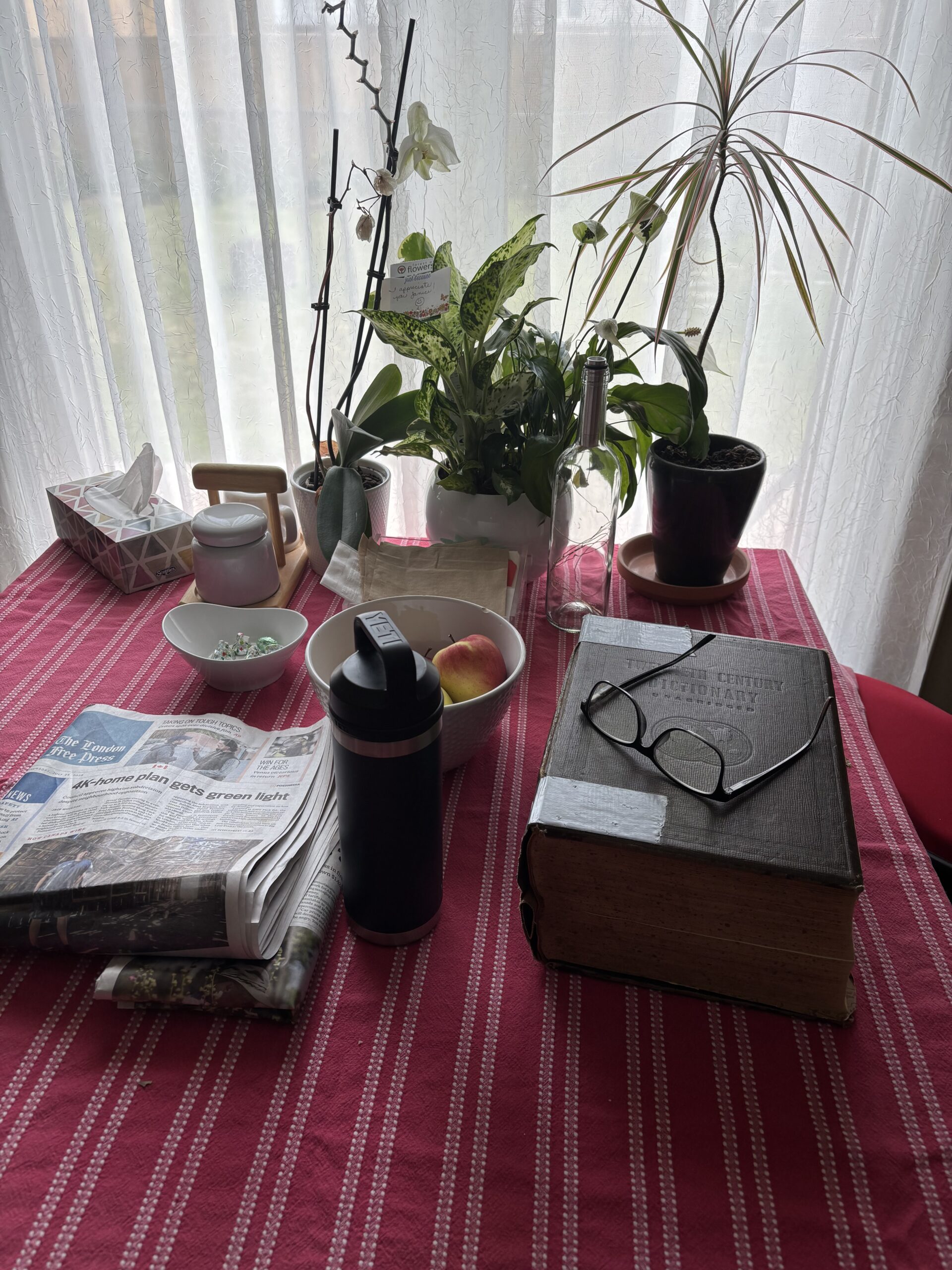
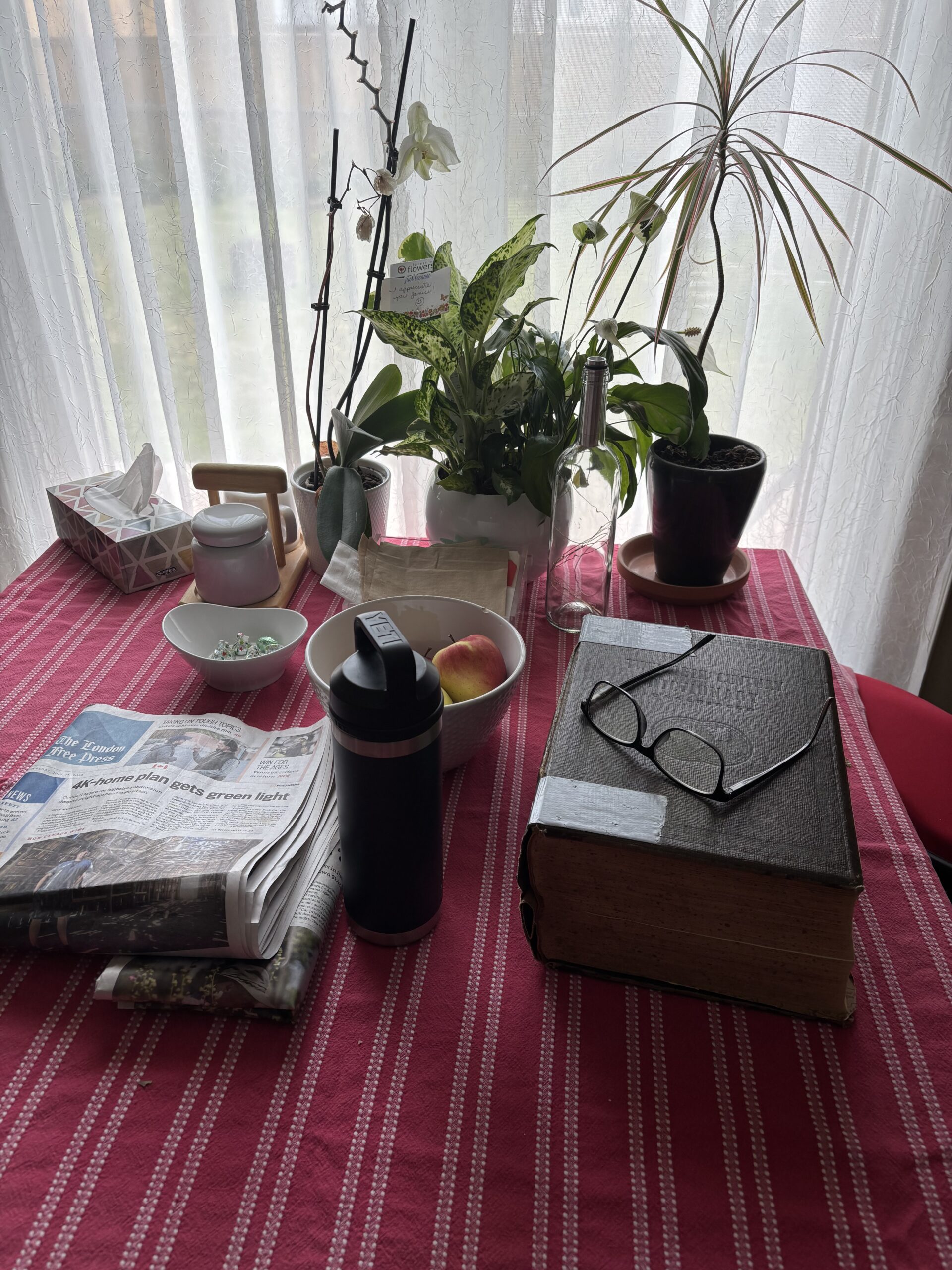
My 1939 Webster’s was the inspiration for the dictionary Jaimie carries around the apocalypse. She’s a thick one, eh?
Webster’s Dictionary of the English Language, 1939
If you are a word nerd, too, subscribe to my Substack for fun, new vocabulary explorations each weekday.
For links to all my apocalyptic epics and killer crime thrillers, check the links to Amazon down the right-hand side of this page. Enjoy!
Find out more about today’s Vocab Menace video postPHARO and PHAROS below.
In almost every interview with a writer, the interviewer will ask, “Where do the words come from?”
They’re always talking about “the muse.”
My answer is “My brain assembles factoids into narratives. Oh, and childhood trauma. Also, adult trauma. And….” Then I gesture vaguely around, alluding to all the nonsense that pervades our common experience. The news, social media, and falling down rabbit holes on Wikipedia provide plenty of raw material to construct delightful fictional conflict.
When I think about where words come from, I take a more literal approach. I own a huge Webster’s dictionary from 1939 (pictured). I forget how it came into my possession, but I’m sure it must have come from a library sale or used bookstore. This particular edition was the inspiration for Jaimie Spencer’s beloved dictionary in my apocalyptic trilogy, This Plague of Days. I had to apply duct tape to keep it from falling apart.
My kids have big vocabularies. Partly, that’s osmosis from growing up in a home packed and stacked with books. Also, we always spoke to them as if they were little adults. As babies, they were no doubt confused at times. Nonetheless, I figured they’d catch up and eventually understand my words and sense of humour.
Recently, I decided to make a video series out of my fascination with words.
It’s easy to post on social media with rabid urgency, “BUY MY BOOKS! BUY MY BOOKS!” Easy, but not effective. I’m always looking for new readers, of course. Every author is. However, I’m allergic to marketing. I do it, but I don’t enjoy it. Exploring the meanings of words and where they come from, though? That gets the happy neural juices flowing.
Vocab Menace was born.
Why call it Vocab Menace?
Words can be fun and interesting.
Your challenge each day is to slip these rare or unusual words into casual conversation as if it’s no big deal.
Imagine the satisfaction you’ll derive from all that simmering, smarmy, and artificial sense of superiority!
Like, subscribe, and share. All that stuff is sexy.
PLEASE NOTE: I’m away from social media next week (July 28-August 1).
I’m taking a deep dive into isolation to work on my new novel, but Vocab Menace will continue after that brief hiatus.
About today’s post:PHARO and PHAROS
In today’s video, I promoted Lighthouse Legaciesby Chris Mills.
Description:
Imagine living your life perched on a tiny island, without electricity, exposed to the fury of the sea, and always at the service of the mariner. This is how lightkeepers and their families spent their lives, even up until the 1960s. We are very close to losing the last of the people who lived this isolated life and experienced the heyday of lightkeeping in Canada. Lighthouse Legacies lets us share in the memories of those who kept the lights.
These stories are presented largely in the words of the people, with context and history by author Chris Mills. Each chapter deals with an element of lighthouse life and is complemented by photos from lighthouse family collections, the Coast Guard and Mills’ own collection.