If you want a happy ending, it depends on where you stop the story.
– Orson Welles
Once upon a time, several years ago, She Who Must Be Obeyed and I were lolling on the couch discussing happily-ever-afters (or HEA, if you’re a savvy reader).
Writers are often told to write what they know. If that were too solid a rule, too much excellent science fiction would vanish from existence. I say, write what you care about, and great things will follow. Similarly, it’s not my aim to provide a HEA every time so much as give readers a satisfying ending.
“So maybe I’ll cry, maybe I won’t?” my wife asked.
“You may turn the last page shuddering in tears of joy and recognition,” I replied in an arch English accent (because that’s my villainous voice). “Even if the resolution turns into a Pyrrhic victory, I dole out some hope. It’s not a downer ending I’m looking for, just a real one.”
“So bittersweet, dripping with verisimilitude?” SWMBO asked.
“Yeah, but not too much.”
“Why’s that?”
“Because fiction should be an entertaining escape. Real life is too harsh. In real life, our endings are all too tragic and full of fear. Take this moment,” I said. “You and me are on the couch, and the kids sleeping peacefully in bed. This will all end in tears, but right now is our happily ever after.”
Her eyes widened.
“This is it, baby,” I said.“Our happy ending! Are you happy?”
Some readers mistake a fictional character’s opinion for that of the author. Were that true, I’d be in prison by now. My plots are full of characters living on the edge of society…okay, that much is me. Let’s start again: Not every thought a character espouses reflects my values. However, some books strike closer to home than others.
My mission is to entertain. I’m not trying to predict the future. I do extrapolate plenty, and in the last few years, reflecting reality has become more unsettling. Inevitably, my political views slip in where appropriate. No apologies or regrets on that front.
“I don’t try to predict the future.All I want to do is prevent it.”
~ Ray Bradbury
Here are five times my work reflected reality closer than I expected:
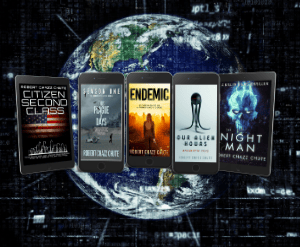
In Our Alien Hours, the alien threat rises from ocean. Seen the news lately? Nobody seems to care, but I’m prescient!
In The Night Man, the dad is a drug smuggler, but he’s just trying to get cheap Canadian drugs to Americans who are in need. The protagonist is a wounded veteran with few choices after he is medically discharged.
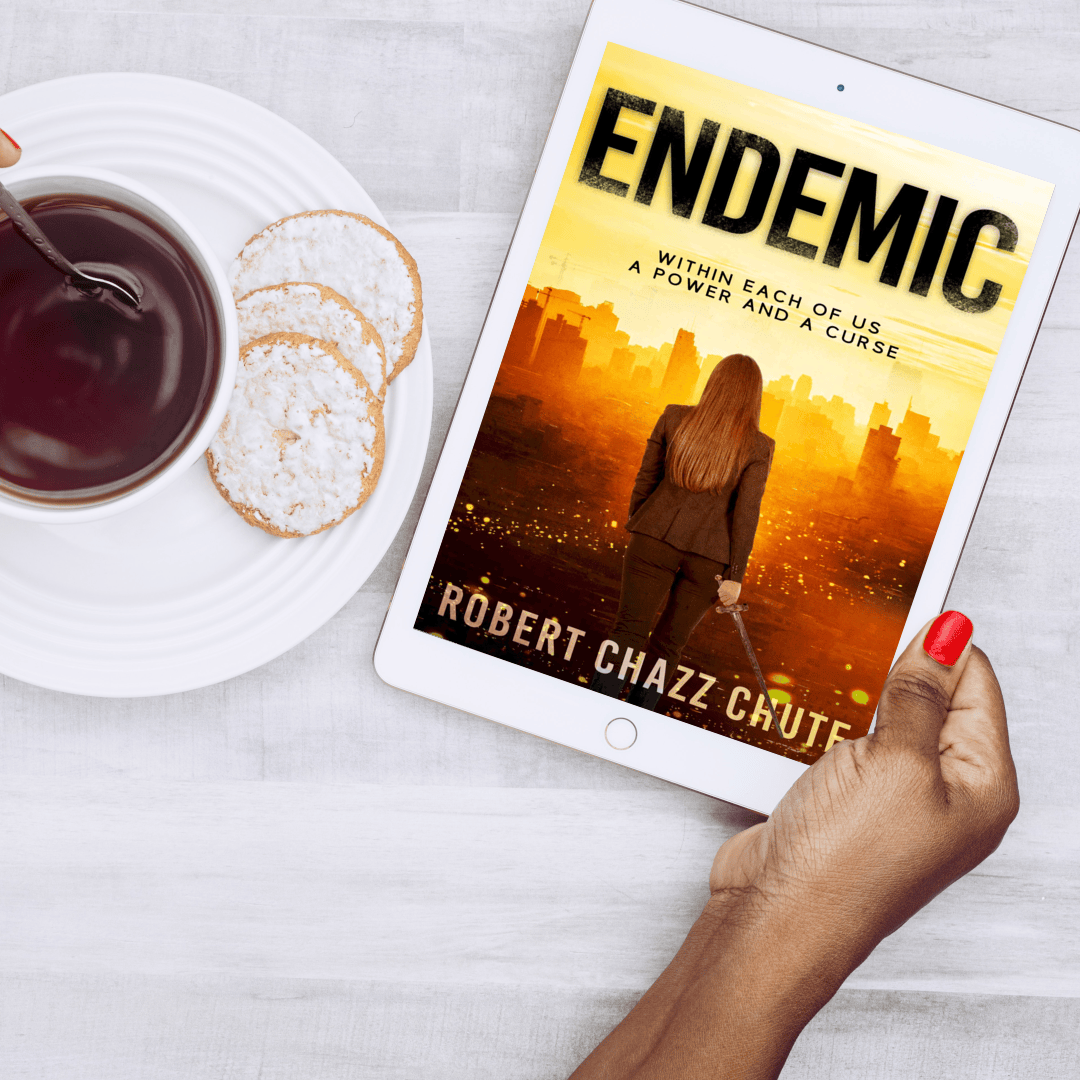
The genesis of Endemic is a virus that kills billions. Many of the survivors suffer cognitive impairment. Long-COVID (and repeated infection) gives some people brain fog, and since the disease is now endemic, we will continue to see such ill-effects to brain health.
In This Plague of Days, paramedical professionals were recruited to make do and join the fight against a pandemic. Long ago, I sat in a meeting about pandemic preparedness. This was part of the plan. I informed those in charge that this was a terrible idea and gave multiple reasons why. I was fired for it. In This Plague of Days, a non-medical person works in a hospital. She and her baby are infected because of that ill-conceived strategy.
Citizen Second Class is unfolding now. The uncaring elite are building bunkers and fortifying their islands, while the lower classes worry about providing for their families.
Then, of course, there’s my upcoming thriller, Vengeance Is Hers.
Given all that’s happening in the news and the many failures of the justice system, I predict there will be an appetite for vigilante justice thrillers.
Endemic is an apocalyptic novel, but what is it really about?
Ovid Fairweather is a survivor in what remains of New York after the fall of civilization. A pandemic has killed billions worldwide. Many of those who survived their infection have reduced mental capacity. Marauders swarm the city hunting for Ovid because she has a secret garden and survival skills.
That description only addresses the plot, not the theme.
Many apocalyptic scenarios can be shallow. I’m not interested in watching a hyper-prepared former soldier mow down rivals for supplies. I initially enjoyed The Walking Dead, but the story lines became too repetitive and the tone too relentlessly grim, devoid of any humor.
All the protagonists in my books are underdogs. Ovid isn’t a soldier. She’s a bookworm. She’s intelligent, socially awkward, asexual, and on the spectrum. She could flee to the relative safety of her father’s farm in Maine, but her dad doesn’t understand her. She’s too stubborn to leave New York, and doesn’t want to deal with him.
That struggle with her father is where the theme of Endemicemerged.
Through adversity, Ovid grows stronger. Forced out of her shell by circumstance, she helps others. She’s been a nail all her life. The complications she faces will make her a hammer. Eventually, she’s destined to become a queen.
Ovid changes and improves, but in the end, she remains true to herself. She does not flee to safety. She stays to lead and to protect her found family.In the final analysis, Endemic is an action-adventure novel about how gradually people change and how they don’t.
When people ask me where I get my ideas, I have to say, “All around me.” From my impatience in long lines at the grocery store to my anger at an unjust world, there’s plenty to spur my bitter imagination.
Vengeance Is Hers is the origin story for a vigilante. Molly Jergins sees a fellow student at her high school assaulted. The bully receives no real consequences. Molly launches a one-woman campaign get the bully and his awful family banished from Poeticule Bay, Maine. She’s only in high school, but Molly has found her life’s calling.
The novel is about Good versus Evil and where the line between the two blurs. It’s about growing up in a town too small for your big dreams. I also include a lot of ideas on how to get back at people who deserve your wrath.
The manuscript is with the editor. We’ll do three rounds of edits and polishing, plus the excellent work of beta readers. Launching in early 2025! Please stand by!
I repeat: This is not an instruction book! But….
Okay, yes, you can expect a lot of clever ideas of how to exact vengeance upon your many, many enemies. Where do I get those strategies? Mostly from my imagination. A woman on TikTok gave me an idea about how to best plague an enemy with the stench of sour milk. Listening to The Daily Zeitgeist podcast gave me some fresh fun on the helpful dangers of bouncy castles. I thank those influences in the Acknowledgments section at the back of the book.
Mostly, I think a lot about the people who have wronged me or someone else and contemplate what might be a useful weapon I could pick up at any hardware store. You will, too. It’s funfiction
Vengeance Is Hers is still in the editing process. If you can’t wait for an excellent story of vigilante justice, read The Night Man now.
Easy Jack isn’t a bad guy, but to survive, he will have to act like one.
“You’re guaranteed a mighty fine read.” ~ Claude Bouchard, USA Today Bestselling author of the Vigilante Series.
From the author of the Hit Man Series comes a new killer thriller.
Returning home after serving his country, Ernest “Easy” Jack hoped his family’s reputation had been forgotten. No such luck in Lake Orion. Small towns have long memories. Grudges run deep. Worse, his high school sweetheart is trapped in an abusive marriage. Family bonds, love and loyalty will be tested when a sociopathic billionaire and a dirty cop conspire to use Easy in a deadly bomb plot.
When a fellow student is attacked and run out of town, police and the school administration in Poeticule Bay, Maine prove useless. Enraged, Molly Jergins launches a campaign of vigilante justice against the school bully.
As threats and vandalism escalate to a war ending in death, the line between right and wrong blur. Molly tries to be good, but when hunting monsters, she will be safer if she becomes a better monster.
Revenge is the best success.
Robert Chazz Chute is a former crime and science journalist for newspapers and magazines. A graduate of the University of King’s College and the Banff Publishing Workshop, Robert has won fifteen awards for his writing. He pens suspenseful crime fiction with muscle and apocalyptic tales with heart. His hidden headquarters is a blanket fort in Other London. Vengeance is Hers is his twenty-ninth book.
Hemingway said, “Write drunk, edit sober.” I say, stop being such a chicken. Take more risks.
In my fiction, I look for opportunities to do innovative and unexpected things. The chapter titles to This Plague of Days trilogy aren’t just numbers. Go to the table of contents, and the chapters form an epic poem that hints at the complex events across the narrative. Is that weird? I don’t care if it’s weird. The clues to the story are there, but it’s actually more fun for the reader to go back to read that poem again after they’ve completed the trilogy. They’ll gain a deeper understanding once they’ve read the story. (In gaming, they call that replay value.)
In my new thriller, every chapter title is one word that ends in -ion, and relates to what’s happening in that chapter. For instance, instead of Copyright, Table of Contents, and About the Author, you get Notification, Configuration, and Confession, respectively. (And yes, there really are that many useful words with the -ion suffix.)
Some publishers would clutch their pearls at such deviations from the norm. Who cares? I am the helmsman on this voyage, and I say we skip the Panama Canal and risk the storms around the Cape of Good Hope. No one remembers a voyage over calm seas.
Have you got anything besides title tricks, Rob?
Sure. Proper editing ensures that we communicate well and do not confuse readers in our efforts to entertain them. I’m not getting in the way of that, but I will deliver the unexpected. Editors make prose clear, not safe. Who said it was supposed to be safe? To quote another sage of our age, Captain James Tiberius Kirk insisted, “Risk is our business.” Put another way: Let’s be interesting. Resurrect old idioms. Come up with new idioms. Experiment with expressions that have never existed in real life. (Not yet, anyway. I’m hoping some of my innovations catch on.)
I look at Papa’s advice with the same dim view as, “Kill your darlings.” That mindset done too broadly will eliminate your most clever stuff. Inside jokes can be okay. That’s the writer writing for themselves and the die-hard fans. As long as you don’t disappear up your own metaphorical butt, it works a treat. “Works a treat” is a dated British expression some beta reads would flag. Leave it in. They are readers, so assume they’re smarter than stale toast. Trust them to pick up context clues.Free yourselves! Break the rusty chains of the Olde Gods!
Readers who aren’t in the know will skip right by sub-references.
In 1985, I met with the great science fiction writer Spider Robinson. I was a fan, but I hadn’t read all of his stuff yet. He sat me down over coffee and spoke of his origins as a writer. He looked very serious as he opined something like, “I was on my bed, naked, with some good tunes on the stereo, a drink in one hand, some hash in the other, and a book in my lap. It occurred to me that I was bored.” So Spider decided to write his own novels instead of just reading them.
Only after I read more of his work did I run across those words in one of his novels. I didn’t know it at the time, but he was quoting himself.Good on him. When you’ve got good words, don’t give the same speech once.
On Black Friday, I visited Villains, the companion shop to Heroes, the best comics shop in Other London. I bypassed the men-in-tights stuff of my youth and went straight to the indie publishers’ offerings. On the hunt for fresh and interesting stories, I found them. Think in terms of Harvey Pekar’s American Splendor. Or lush watercolors without a single line of dialogue that still tells a story. I’m a fan of Iron Man, but you can’t say Marvel and DC are taking risks. Their products are dependable, but you won’t experience many new flavors.
Writers, take risks. Readers, please indulge us. We’ll make it more fun for both of us.
Now about those pictures
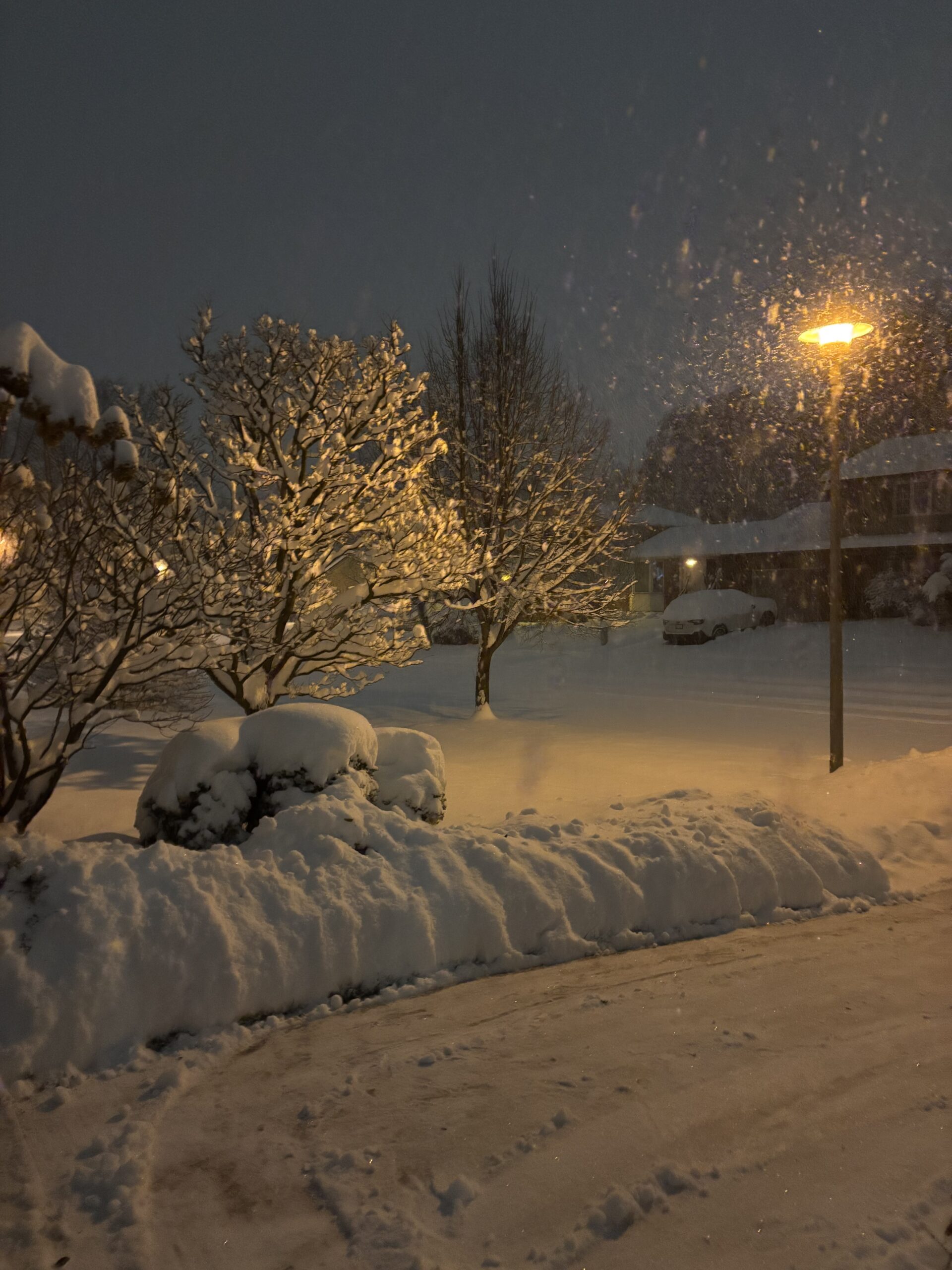
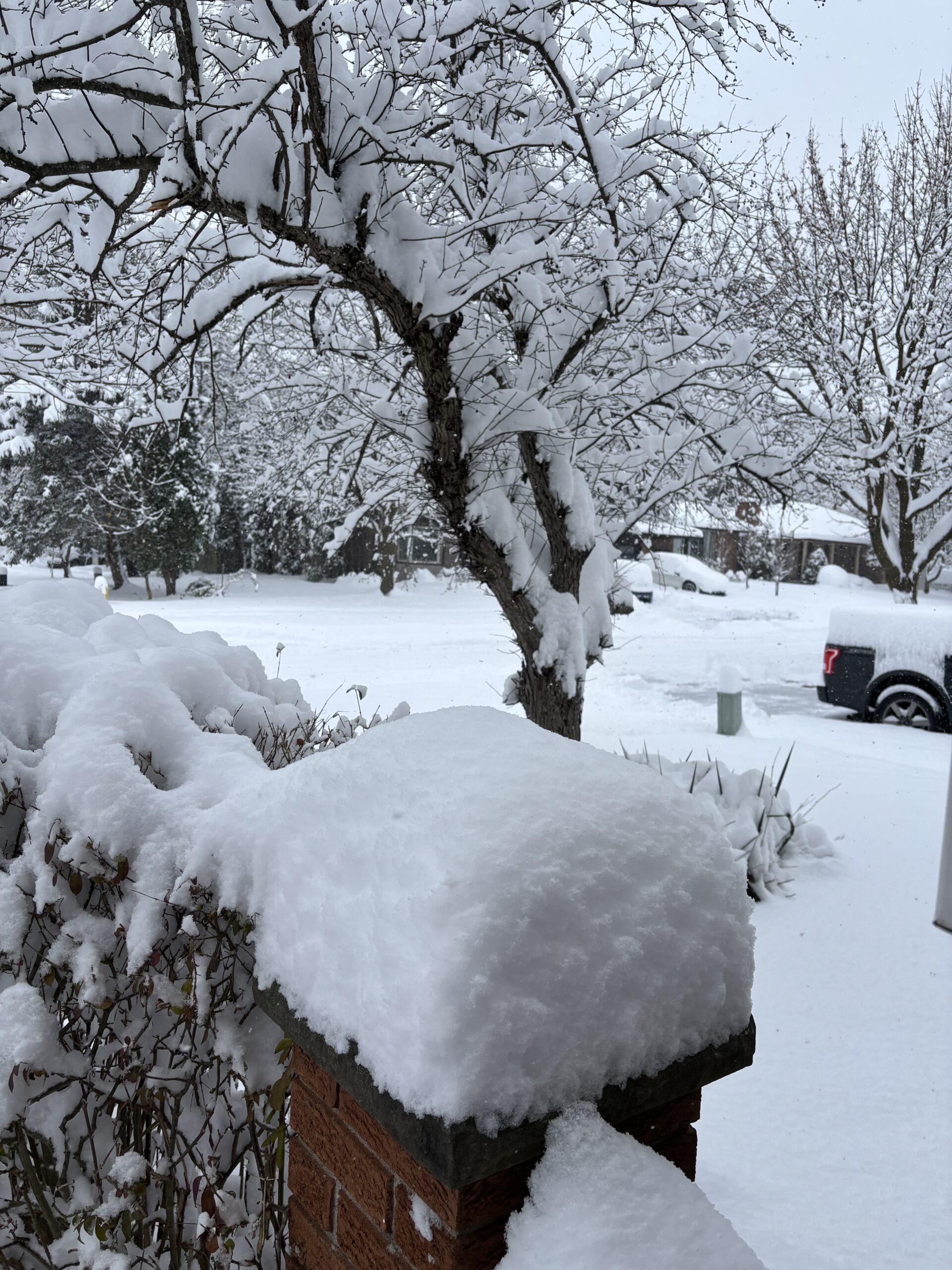
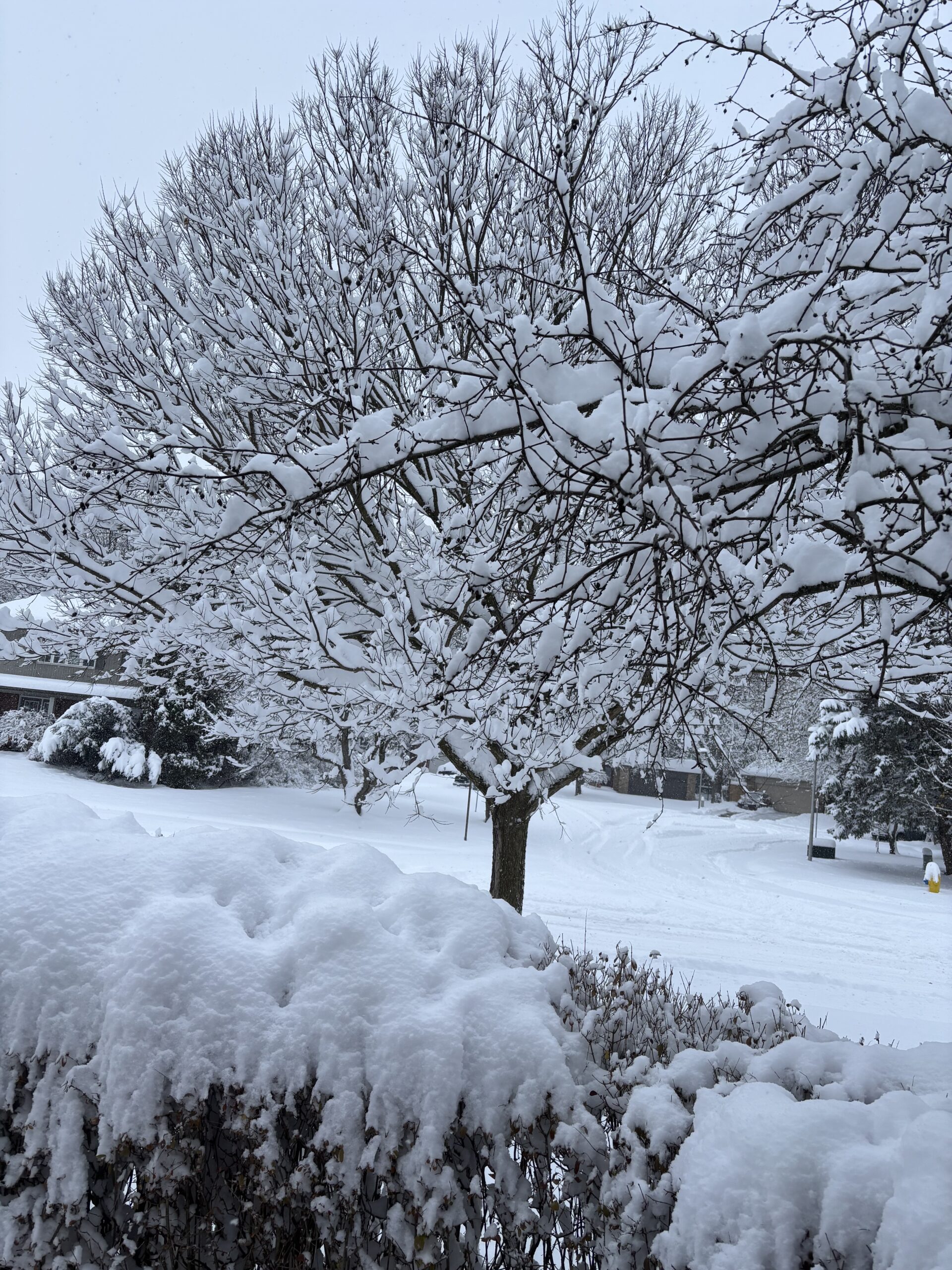
Last night, I could not sleep. With an appointment to get to this morning, I decided to do battle the snowstorm. The first snowfall has always been a tentative thing, a warning of what’s to come. It’s Motherhumping Nature asking, “Have you got your snow tires yet? Did you remember to pull the snow shovels from the shed?” (Yes, to the first question, negatory on the second, dammit.)No mere warning this time, though. Got a big dump of snow that is still pummeling us as I write this.
At 4:45 a.m., I was out there slinging it, testing my new hip. Worked fine and barely raised my heart rate. I shoveled about a foot of snow. By the time I was done that and had cleaned off the car, I had to shovel again. Dug a fresh six inches at 8:45 a.m. Saints preserve us, winter is here. I prefer palm trees, but I do like how quiet the landscape becomes once the sharp edges and hard surfaces are soundproofed under a thick blanket of snow.
And when it gets very cold — Moon cold — the snow squeaks underfoot. Of course, by then, I’m afraid to go outside and hide in my blanket fort, writing the next novel.
My parents did brave things. Having kids is brave. Starting and running several businesses took courage and ongoing resolve. My mom saved lives as a lifeguard and a nurse. My dad dealt with criminals and physical conflict several times. The hardest thing they dealt with was the end of their lives. Mortality is scary, but they faced the Reaper with grace. (Well, Mom was pretty mad about it, but with her last breath she did wave goodbye.)
I was unfair to my parents.
When I was younger, I thought fear governed them. I felt that whatever I wanted to do, they were there to thwart my ambitions. Mom and Dad seemed to wage a war on fun. I don’t think I fully understood their protective impulses until I had kids of my own. You want to shield your children from harm, and you worry a lot. You also want to prepare them for the world. It’s a difficult balance.
When I said I wanted to be a journalist, my parents were supportive. Working for newspapers and magazines sounded relatively safe to them. Switching my aims to working for book publishers pleased them, too. Later, when I said I was going to be a freelance writer, they got nervous. They were right to be so.
The night I told my parents, “I’m an artist,” I’m sure Mom hurt herself rolling her eyes. I could never make enough money to satisfy my father. They never asked if I was happy, only how much money I was making. With my kids, I’m only concerned if they are not happy. They’re smart and good, so I have confidence everything will work out for them.
Part of what I do is not so different from what my parents did, anyway. They started and ran multiple businesses. I’ve done the same over the years. I am now down to one. Writing is the artistic side, but publishing is a business, and it is not easy.
Too often, authors don’t think of what they do as a business.
If you are writing for a readership greater than one, you’re an author in business. Though putting words to paper can be therapeutic, it is not my therapy or merely a hobby. I write crime thrillers and apocalyptic epics to entertain. Is it profitable? My point is it’s supposed to be. I put movies in my readers’ heads. The story in your head lasts much longer than a trip to the movie theater. My latest thriller took two years to write, and there are many costs involved in bringing a book to market. So, yes, I’d like to get paid so I can continue to write. No shame in that. I love writing, but that doesn’t mean I can do it for free.
With much disapproval in her tone, Mom once told me, “You’re judged by the company you keep.” The company I keep is Ex Parte Press. Please support authors. Read books. Literacy makes everything better, and I’m a big fan of fun.