Does a Canadian Setting Hurt Sales of Crime Thrillers?

We are always scanning the horizon for what’s new. Last night, I rediscovered a gem at the bottom of the jewelry box. I found the answer to my question there, too.

A cop once asked me, how can you write crime thrillers without a cop as the central character?

“Easily,” I replied. “A team of crack investigators with all the power and authority of the badge is playing on god mode. I write about underdogs. The police may show up in my fiction, but they’re only batting cleanup after some crazed characters do the interesting things crazed characters do.”

The protagonist of my new release is a former FBI profiler, but he’s got PTSD, a bum hip, and a slippery grip on reality. Dr. Simon Fethullah relies much more on his wits than his gun.

In Where the Night Takes Us, all the action takes place at Dr. Simon Fethullah’s hideaway in Montana. He thought he was safe there. He was mistaken.


The second book in the Fear-Death Series is titled When the Night Finds Us. The novel is in the editorial pipeline. (I’m going over edits and suggestions today.) The story is set in Texas.


How the Night Claims Us is a pile of notes, character descriptions, and plot points at the moment. But what setting will be best for the third in this series?

This is not my first foray into crime fiction.

My backlist includes the four books in the Hit Man Series, The Night Man, Brooklyn in the Mean Time, Vengeance Is Hers, Murders Among Dead Trees, and Sometime Soon, Somewhere Close. (Ahem! See the sales links to the right.) Most are set in the United States.

Initially, When the Night Finds Us was going to be set in Florida. As a proud and thankful Canadian (and a member of the Crime Writers of Canada) I reconsidered. I grew up in Nova Scotia. It’s not an exotic destination to me, but it is unfamiliar or much loved by many. Dad always referred to the Annapolis Valley as “God’s Country” and, though he’d traveled the world, he couldn’t imagine the allure of living anywhere else.

Where the Night Takes Us is set in a fictional, rural area of Montana. When the Night Finds Us is set in Defiant, Texas. (That name sounds redundant, doesn’t it?) Is it time to add an international flavor to my forensic psychiatrist’s investigations? Would a Canadian setting hurt sales with my American readers?

Retrieving the Forgotten: In Praise of the Backlist

To taste that Nova Scotian flavor again, I revisited an anthology I published in 2019. Sometime Soon, Somewhere Close explores the minds and methodologies of some messed-up people. The first story is set in Port George, Nova Scotia. When I was a kid, my parents often drove the few miles up the mountain and to the shore there to take in the sunset over the Bay of Fundy. (Motto: Highest Tides in the World!)

The sunsets were lovely, especially that sumer the dust from Chinese nuclear tests colored the sky. (Not kidding.) We could see the lights of New Brunswick across the waves. It looks closer than it really is, but it would not be an easy swim. It was cooler on the shore, so while descending the South Mountain back down into the Valley’s summer heat, all the car windows would fog up in a flash. The fogged windows hit about the same moment your ears would pop from the change in elevation.

It’s the sort of drive you take with your parents when you’re little, and if you’re good, you might get ice cream in Margaretsville. Later, after you get your driver’s license, you take your girlfriend on those same forays to the Bay of Fundy to see the sunset and wait for the stars to come out.

Revisiting old work can produce a very particular anxiety: Is this how I finally discover a typo previously missed?

However, thankfully, no typos! Rereading that story after all this time was wonderful. And it pulled me into the next short story, and the next, and the next! It wasn’t mere nostalgia. Details I’d forgotten came flooding back. Not to toot my own horn too hard, but damn, that Robert in 2019 turned some good phrases and added clever twists. I’d like to think I’ve only improved, of course, but time and distance from a previously published title added to my appreciation of what I was doing with that book. I’ve had time, and many books since. I was nice to come at it anew.

In short, Somewhere Soon, Somewhere Close holds up.

So, what’s next?

There are logistics to consider, and a few minor adjustments. I think I can get Dr. Simon Fethullah, his driver Paloma, and Simon’s enormous dog, Stephano, up into the Great White North. There are rich settings in Nova Scotia, and I know them well, so why not? My impulse for the change started with an Elbows Up attitude, but the place will serve the story well, too.

But a haunting question chewed at the back of my brain. Most of my readers are US citizens. Will they be interested in a setting outside the United States?

After graduating from journalism school, I got my first training in publishing at the Banff Publishing Workshop decades ago. I remember two lessons from that bootcamp experience:

1. Unless it’s a book about golf or gardening, green covers don’t sell.
2. American readers want American settings (not North American settings).

I’m not sure about #1, but #2 has changed. For those who disagree, maybe I’ll change their minds.

Last weekend I visited a very small but very well-curated bookstore. Scanning the Mystery/Thriller/Suspense sections, it was remarkable how many vicars in Yorkshire are sticking their big noses into murder investigations. Book clubs across the UK are embarrassing Scotland Yard with their amateur sleuthing. The lessons I learned at the Banff School of Fine Arts was a wonderful introduction to publishing (and got me jobs in book publishing the moment I moved to Toronto). But some stale advice has become old tattered hat, ready for the bin.

People want a good, well-written story that keeps them up at night turning pages. I can deliver that, no matter where Dr. Simon Fethullah hunts serial killers.

The pre-order for Where the Night Takes Us is up now, only 99 cents for a limited time.

~ I am Robert Chazz Chute. I write suspenseful novels about evildoers now and at the end of the world. Or is “now” and “the end of the world” redundant?


Knowledge offers no comfort when it confirms your worst fears.


A particular kind of fear lies at the heart of psychological thrillers: the fear that escape is an illusion.

In Where the Night Takes Us, Dr. Simon Fethullah tries to step away from the violent world he knows. As a forensic psychiatrist working with the FBI, Simon used his expertise to understand dangerous minds. His testimony helped convict the Rainy Day Cannibal, but the victory came at a terrible cost. After taking a bullet, Simon retreats to Montana with his wife, Carla, and their enormous dog, Stefano.

Montana seems like the perfect place to begin again. The landscape offers distance, quiet, and the promise of a life untouched by Simonโ€™s former work. Yet the novel steadily questions whether physical isolation can ever provide emotional safety. Simon may be far from the courtroom and the FBI, but he is not free from memory. The people he studiedโ€”and the consequences of helping put them awayโ€”remain part of him.

That tension between peace and threat drives the story forward. The quieter Simonโ€™s new life appears, the more unsettling each intrusion becomes. When threatening postcards arrive, they transform the landscape around him. A remote home is no longer a refuge. Every road, window, and distant sound can become part of the danger.

The book also explores the weaponization of knowledge. Simonโ€™s mind made him valuable in the fight against criminals, but it is also his torment. He understands how predators think, which means he can recognize the implications of a threat before anyone else. That insight may help him survive, but it also prevents him from dismissing the danger.

Then there is the Rainy Day Cannibalโ€™s influence. Though imprisoned, he is not powerless. His loyal following allows his ambitions to travel beyond the walls meant to contain him. The novelโ€™s most chilling idea is that a person can remain dangerous without direct access to the outside world. A prison cell may hold a body, but it cannot necessarily contain an idea, a grudge, or a devoted accomplice.

For readers drawn to stories about damaged minds, moral uncertainty, and the long shadow of violence,ย Where the Night Takes Usย will be your binge read this September.

Where the Night Takes Us launches on Amazon for just 99 cents for a limited time.

Where are you taking me? Lessons learned.

Where the Night Takes Us is the first book in the Fear-Death Experiences series. It’s a thriller about Dr. Simon Fethullah, a retired FBI profiler stalked by the Rainy Day Cannibal. Rainy Day is in prison, but his reach goes far beyond the bars of his cell.

Early feedback has been great! The beta readers love it!

Note: Where the Night Takes Us is available for pre-order now at this link. The novel launches September 14th! The pre-order price is heavily discounted. And thanks! With a couple of clicks, you help me immensely.

Yesterday, I passed a big milestone on the path to publication.

I completed the manuscript for the sequel: When the Night Finds Us. This mystery/thriller begins with Simon, suffering fallout from the events in Where the Night Takes Us. When a villain runs him off the road, the good doctor is injured but intent on finding new purpose. He buys a big RV, hires a driver, and heads off to Texas with his faithful dog Stefano.

His mission: A girl has gone missing from Defiant, Texas. Find Willy Dupree, dead or alive. As his perception of reality blurs, Simon will have to find his way through the darkness and, maybe, back to the light.

I’m so happy with the story. It has heart and thought, twists and turns. I love all the sassy banter with Simon’s driver, Paloma Garrido, too. There’s action and mystery, but room for plenty of jokes, too. My final draft is off to my editor, the great Gari Strawn. I’m aiming to release this sequel by the end of October.

Thriller cover for the novel When the Night Finds Us


Lessons learned

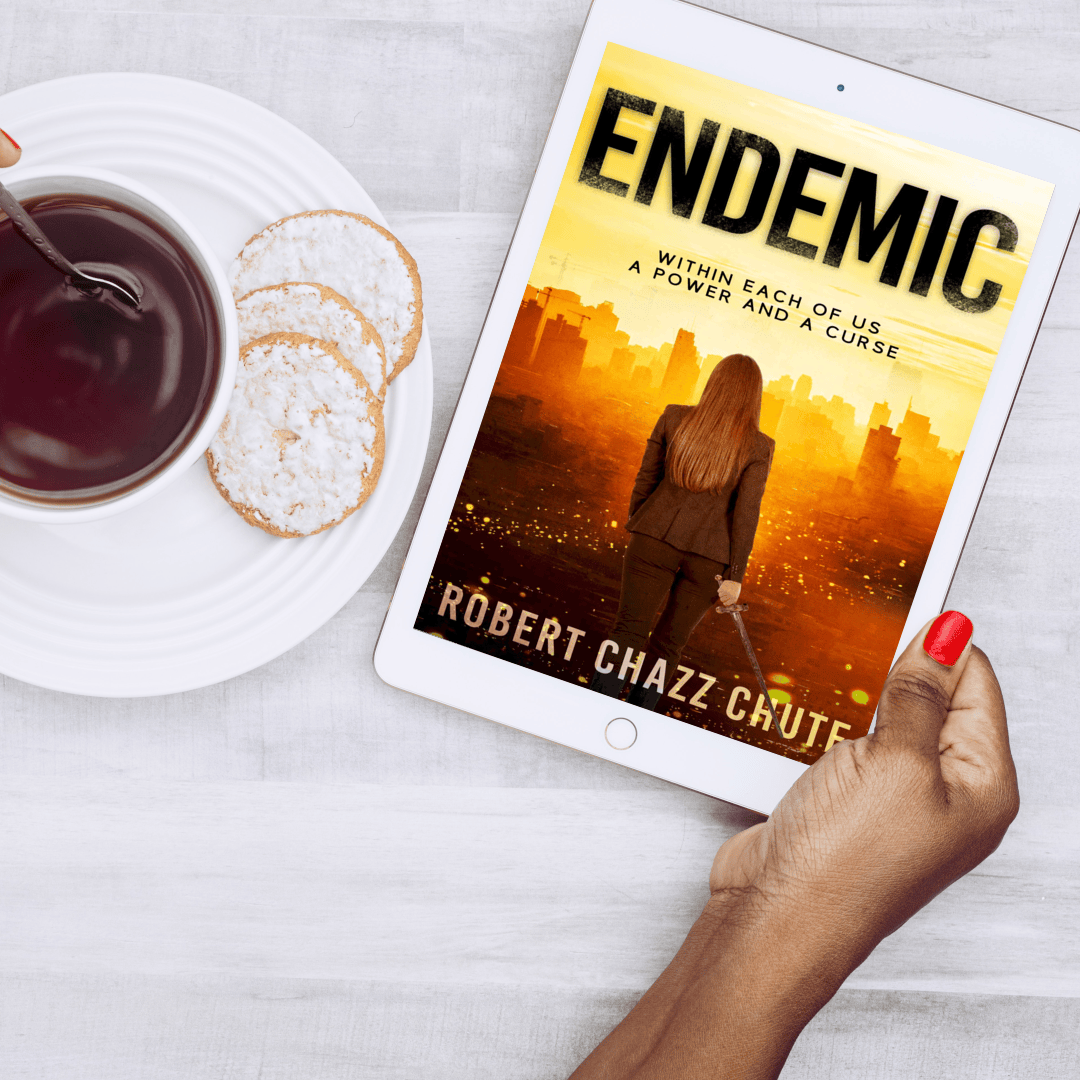
  1. The previous two novels I’ve published, Vengeance Is Hers and Endemic, are big books. I wrote them that way because the stories I wanted to tell demanded room to move. Vengeance Is Hers, in particular, needed length because the instigating incident occurs when the heroine, Molly, is in high school. After a tragedy, she leaves the only home she’s ever known to try to leave her penchant for vengeance behind her. She grows up a little and tries to make a peaceful life. Her instinct to seek justice in her inimitable way leads her to lose her job in academia. With nowhere else to go, she returns to Poeticule Bay, Maine, after twelve years. When she discovers that the town has changed, but the villains haven’t, she slips back into revenge mode.

    When I discussed the book with literary agents, they had two concerns:

    (A) The age of the protagonist. Is this a young adult story? Is it contemporary women’s fiction? New adult? Molly goes from a teenager to twenty-nine, so what shelf in the bookstore is appropriate?

    (B) The length. At 114,000 words. Was it too long for the usual genre expectations?

    My answers: To point A, Vengeance Is Hers crosses genres. Point B, yeah, maybe so (but so what?)

    If I had to pick one category for VIH, I’d say New Adult, but my primary market is not bookstores. My sales platforms are mostly digital. By not heeding the agents’ cautions, did I hurt my book sales? No. Online sales platforms are search engines. There is no shelf. There is metadata, keywords, descriptions, and the cover. That’s what sells it.

    Besides, the VIH story I wanted to tell required that length. To serve readers best, a better story demanded I write against industry expectations.

    Lessons learned: Not all advice is for everyone all the time. Consider good advice from well-meaning experts. Reject advice when it feels constrictive, dated, or simply not for you. Follow your heart. No regrets.

    BONUS: And take heart! The publishing industry is, in many ways, a complete mess right now. If you’re forging your own path, you’re in great company.

    2. Not fitting into a box is not what hurt the sales of Vengeance Is Hers. I did.

    I focused on the writing, not the marketing. VIH is considered excellent by those few who have read it. However, I was impatient. It had been a long time since I’d published Endemic, and I was concerned I’d been forgotten by my readership. Too eager to hit the button, I basically tossed VIH out there without priming the pump by letting more people know it exists. There are so many books published each day that it’s very easy to disappear in the book marketplace. That’s more and more true each day with the flood of AI slop books.

    Lesson learned: Hope, history, laurels, a few ads, social media posts, and newsletters are insufficient. We must advertise and nurture sales as if the book’s a flightless baby bird in the nest. I write great novels. (Hey, false modesty is false!) But anemic marketing is the equivalent of an opera singer belting out beautiful arias in a soundproof room.

    So what’s next, Rob?

    For Where the Night Takes Us, I’ve engaged BookSirens, Booksprout, and Itsy Bitsy Book Bits to find reviewers. I’ve sent out advance reader copies. I’ve completed fresh research, and there’s yet more to do. I’ve experimented with ads and taken more book marketing seminars. I have someone lined up to help me promote When the Night Finds Us.

    I’ve proven myself great at plotting. Now I have to engage in more planning. Do I enjoy the marketing end of the publishing business? Not really. I didn’t always enjoy selling other people’s books when I was a rep for several publishers. However, I sold millions of dollars’ worth of books to stock bookstores across Toronto and Cottage Country.

    I love writing. I love entertaining readers. It’s unreasonable to expect to enjoy every aspect of your work. To find readers, I have to promote. I can’t hide in the blanket fort forever with only my keyboard to keep me warm. And so, to market, to market.

    (Hint: If you do enjoy every aspect of your work, keep it to your own damn self, weirdo!)


    3. About Shiny Keys Syndrome
    Working on the Fear-Death Experiences Series, I got back in touch with an edict I’d almost forgotten: Commit to one path and don’t be too precious about getting the words down.

    It is so easy to suffer Shiny Keys Syndrome. Ideas are cheap, but it’s the execution that takes so much time. I do not use generative AI, and I’m not a great typist, so I go slow.
    Along that long road, it’s easy to get distracted by the latest brilliant epiphany for a different book. I often wake up with inspiration in the morning or the middle of the night. Instead of looking away from my work in progress and listening to the siren song of those jangly keys, I stay the path, hold the line, and keep working on the book I’m already writing. So many ideas, so little time! If only I were immortal, or at least nigh-immortal.

    To ensure that I don’t wander off like a toddler at the fair, I’m keeping better track now. Each day I record what I accomplished and what I plan to do tomorrow. All in shorthand, my notebook is part diary, part tracker, and all encouragement to keep my energy up and the momentum moving forward. Being a novelist is fun, but at its core this is still work. It’s a job, and jobs require attention, purpose, focus, and showing up consistently.

    Final thoughts

    Track your progress, because that which is not measured is not improved.
    Show up.
    Keep going. Maintain momentum.
    Do what you have to do, even the stuff that’s not comfortable.
    Peace and prosperity may be your aim, but getting there won’t be without speed bumps.
    Too much comfort is a trap.
    Explore options and don’t be intimidated by what you are comfortable with. For instance, running ads can be confounding, but confidence doesn’t come before the task. Confidence follows the work.


    Vengeance Is Hers and Endemic are available on Amazon and these fine stores:

~ Have we met? I’m Robert Chazz Chute, blanket fort dweller, achy-ass cyclist, erstwhile Nova Scotian, graduate of journalism school and the Banff Publishing Workshop. Fifteen-time writing award winner, I’m also a raging hypochondriac who rages against the night. I pen apocalyptic epics with heart and suspenseful thrillers with brains and muscle. Since writing the Fear-Death Experiences series, I’ve become a huge fan of Cane Corsos like this guy:

Cane Corso dog.
Stefano, the helpful Cane Corso doggie.


Not all serial killer conspiracies are just theories

It begins with a threatening postcard from a serial killer. Before it’s over, the US press secretary will be assassinated, a girl is kidnapped, and the good guy must cover up a murder.

Pre-order your copy of Where the Night Takes Us at a huge discount.

Dr. Simon Fethullah is the FBI profiler who put away the Rainy Day Cannibal. Rainy Day is in prison, but he’s still coming after the good doctor. Hiding in the remote woods of Montana won’t be enough to save Simon and his wife. Stalked and alone, they’ll have to defend themselves from monstrous strangers. Serial killers don’t give up easily.

(Also, you’re going to fall in love with Stefano, but you’ll have to read the novel to find out what he’s all about.)

Where the Night Takes Us releases on September 14, but the ebook is available for pre-order at a steep discount.

(This sale price won’t last long, so grab it now.)

*Want to know more about Where the Night Takes Us? Find out here.

Like thrillers? Read this one before everyone else.

Where the Night Takes Us is a gripping psychological thriller that releases on September 14, but you don’t have to wait. ARCs (advance review copies) are now available to download.

What is the novel about?

Dr. Simon Fethullahโ€™s weapon was his mind. It is also his torment. 

As a forensic psychiatrist working with the FBI, Simonโ€™s testimony helped to convict the Rainy Day Cannibal. After taking a bullet for his trouble, Simon retreats to the wilds of Montana to hide and to heal with his loving wife Carla and Stefano, their massive dog. The good doctor seeks peace, but murderers have long memories. When the President’s Press Secretary is assassinated, a serial killerโ€™s dreams become our nightmares. 

Though caged, prison walls cannot contain Rainy Dayโ€™s ambitions. The madman has a loyal following and a vendetta that demands a terrible price. When threatening postcards find their way to Simonโ€™s door, itโ€™s clear that dangerous people know how to find him, and they are coming for blood.

Why You Might Love Where the Night Takes Us


Why authors give away free copies

Book sales platforms are getting inundated with AI slop. It’s estimated that between 3,000 and 4,000 books are uploaded to Amazon every day. There’s been an alarmingly sharp increase in the number of new books published due to the extensive use of AI.

Note: I do not use AI to write my books, nor is AI used in the creation of my covers and graphics.

To get the attention of the sales algorithms, I need reviews on my work, preferably during the first couple of weeks after the novel’s release.

Here’s how to get your ARC:

Please fill out the short form at this link:

Where the Night Takes Us ARC form


All ARC readers who are accepted will receive a Bookfunnel link to download a digital copy. Enjoy your summer beach read!
Thank you!

~ I’m Robert Chazz Chute, the winner of fifteen writing awards. I pen suspenseful thrillers and apocalyptic epics from my blanket fort in Other London.

What happens when even prison doesn’t stop a serial killer?

It’s sneak peek time! My new novel, Where the Night Takes Us, releases September 14!
This post includes this thriller’s sales blurb, a reading sample, pre-order links, details on the special release price, and availability.

What’s it about, Rob?

Thriller cover

Dr. Simon Fethullahโ€™s weapon was his mind. It is also his torment.ย 

As a forensic psychiatrist working with the FBI, Simonโ€™s testimony helped to convict the Rainy Day Cannibal. After taking a bullet for his trouble, Simon retreats to the wilds of Montana to hide and to heal with his loving wife Carla and Stefano, their massive dog. Simon seeks peace, but murderers have long memories.

When the Presidentโ€™s press secretary is assassinated, a serial killerโ€™s dreams become our nightmares. Though caged, prison walls cannot contain Rainy Dayโ€™s ambitions. The madman has a loyal following and a vendetta that demands a terrible price. When threatening postcards find their way to Simonโ€™s door, itโ€™s clear that dangerous people know how to find the good doctor, and they are coming for blood.

Not sure yet? Okay, try the reading sample and see if you’re hooked. The novel opens like this:

Proviso

There is a body buried in the woods behind my house. He lies in the grave he deserves, unmarked and โ€” as far as I know โ€” unmissed. To me, writing is a compulsion. At some point, I will record the details of my crimes.ย 

If nothing dire happens to my wife or me, no one will ever read these words.ย 

You’re Not Stephen King

Life is a jumble of variables. Countless twists, turns, and tangents lead us to each moment. It is impossible to pin down any one solitary event as the beginning of things. The chain of events that led me to drink this morningโ€™s bitter coffee from my favorite chipped mug can be traced back eons to the mysteries of the Big Bang. Since the universe exploded into existence, evolution branched in certain ways. Some extinction events occurred, and perhaps miraculously, others did not.  That seemingly random chain of events only becomes a sensible chain of evidence in retrospect. So, picking a beginning at random, Iโ€™ll start with the first postcard. It arrived last winter.

With trembling hands, I held a manila envelope, thick and battered from abuse it had suffered in transit. The return address told me this was mail forwarded through my publisher. I stood frozen on the side of the road beside my battered old mailbox and muttered a few choice curses as if words were spells that could keep the bogeyman at bay.

Spring seemed a far-off promise, and a thick blanket of white drifts reached up to my knees. The air was still. Not even the birds sang. It was as if all of nature held its breath, waiting and watching. Snow so quieted the music of the world that I imagined how lonely it must be to be deaf. 

To my right, my neighborโ€™s long driveway was unplowed. Their farmhouse appeared deserted and lonely. I strained to listen for any hint of human activity, but Mercury County, Montana, was as silent as a tomb. Nonetheless, I couldnโ€™t shake the feeling that someone was surveilling me to gauge my reaction to the envelope in my hand. I imagined a faceless stranger targeting me through a rifle scope.

โ€œGet a grip, Simon,โ€ I told myself. โ€œStalkers are rarely serious threats, especially when they announce themselves but still hide behind anonymity. The real ones just come and shoot you in the face in person.โ€

I used to get mail from my literary agent and Ex Parte Press more frequently. After three books, though, the checks shrank, and the correspondence became less frequent. When my book sales were significant, I was excited to receive any missive from my agent, Caison Willoughby, or Holly Papandreas, an editorial assistant at Ex Parte Press. Since an anonymous stranger began getting to me through my publisher, dread consumed me as I approached my mailbox.

Before I even retired from the FBI, Iโ€™d been careful to scrub any online presence that might leak my contact information. Forwarded mail from my publisher was really the only way dangerous strangers could slither into my life. Holly sent me rare fan letters or clips of fresh book reviews. Each year, I received a couple of invitations to literary conferences (flattering, but Iโ€™d never go). 

Once in a while, a murder victimโ€™s family or a criminal lawyer would ask me to get involved in a cold case. Pleas for my expertise fed my ego, but I always replied that I was retired. Forensic psychiatrists are at high risk for early burnout. Thatโ€™s what got me after what happened in Dallas.

In my replies, I made an effort to sound encouraging. Victimsโ€™ families donโ€™t need brutal honesty. I told them the professionals assigned to their cases would no doubt keep their dead loved ones top of mind. That wasnโ€™t true, of course.  Officially, law enforcement never gives up on homicides. However, roughly half of all murders in the United States go unsolved. Fresh corpses demand new energy. Old case files moulder like bodies in forgotten graves.

Postcards from the anonymous sender came at long intervals but ruined all my trips to the mailbox. The editorial assistant never saw the postcards she forwarded to me. They all arrived in a sealed envelope marked personal. Each envelope was indistinguishable from the others. The front of the first postcard was a picture of downtown Albuquerque. 

That first missive wasnโ€™t even a threat. The message was just one word:

Apologize!

A vague command scrawled in bright red ink. No explanation. Iโ€™d spoken to a lot of unhinged people over the years, and not all of them were incarcerated. Standing in the snow as the cold seeped through my boots that morning, I pondered the message. 

Which maniac demanded my attention? And red ink! Did that imply a debt I owed? Or was it meant to signify blood? Or was I overthinking again?

My wife, Carla, was sanguine about the first postcard. โ€œItโ€™s one thing to go to the bother of putting a postcard in an envelope to pop it in the mail,โ€ she told me. โ€œItโ€™s quite another to actually track you down out here in the woods. Success pulls attention from people who donโ€™t have it. Thatโ€™s all this is.โ€

โ€œItโ€™s true that attention attracts resentful crazies,โ€ I conceded. โ€œBefore Mark David Chapman murdered John Lennon, he considered killing Stephen King. Did you know there was a stalker who broke into Kingโ€™s home in Maine and threatened to blow up the place?โ€

Carla said softly, โ€œYouโ€™re one of the good guys, but youโ€™re not Stephen King, darling.โ€

She was right, of course. As a writer, my success was modest. Iโ€™d emailed my best friend and old partner, Agent Denise Absing, that my first book had sold enough to get a second printing. In her inimitable way, Denise brought me down to Earth. When I picked up the phone, she began with, โ€œHey, Can Opener! Got a question for ya!โ€

โ€œIโ€™m bracing for impact,โ€ I replied.

โ€œCan you still squeeze your head through doorways? I wouldnโ€™t get too big a melon if I were you. Your bookโ€™s awfully long.โ€

โ€œMaybe my customers are stacking them up against walls for insulation?โ€ I suggested.

โ€œThat makes more sense. No one reads anymore, Si! Thatโ€™s what makes this second print run of yours an even greater achievement!โ€

โ€œAnd a complete mystery to you?โ€ I prodded.

โ€œI mean, Iโ€™ll get around to reading it, but I have to. As a friend, itโ€™s an obligation.โ€

โ€œItโ€™s so gratifying to hear that Iโ€™ve assigned you homework. Canโ€™t fool me, though. Youโ€™ll read it cover to cover to see how many times your name gets mentioned.โ€

โ€œActually, I was hoping thereโ€™s an index.โ€ 

Deniseโ€™s laugh sounded something like the barking of a seal combined with a new driver grinding gears. When she was done roasting me, she added, โ€œIโ€™m assuming that any mention of my name is paired with laudatory phrases. โ€˜Mercurial wisdomโ€™ would be good.โ€

โ€œYou surprise me, Denise. I didnโ€™t know you could read.โ€

My friendโ€™s teasing aside, after publishing my first book, I thought Iโ€™d made it. Serial Killers I Have Known spent two weeks on The New York Times Best Sellers list (#10, but still), a laudatory review in Publishers Weekly, and a nice mention in an article in The Atlantic.

Starting out, my expectations for a second career in creative non-fiction were high. Once, when a barber asked what I did for a living, he got excited. โ€œWould I have read anything youโ€™ve published?โ€ 

Flattered, but also self-aware enough to be self-deprecating, I answered, โ€œIf youโ€™re incredibly well-read, maybe?โ€

โ€œWhatโ€™s your name? You famous?โ€

โ€œSimon Fethullah,โ€ I said, โ€œbut Iโ€™m only famous in small circles.โ€

The barberโ€™s excitement proved brief. โ€œNever heard of you.โ€

โ€œIโ€™m crushed,โ€ I said. โ€œThis is why I prefer barbers who donโ€™t speak my language.โ€ I left him a large tip for reasons I canโ€™t now fathom and never returned to that barbershop.

To me, succeeding as a writer meant I could finally have the solitude I craved. I fantasized about the happy life of a hermit. Once every year or two, Iโ€™d venture out into the real world. Iโ€™d fulfill my contractual obligations at a book launch followed by a bunch of bookstore signings across the country. I held on to those delusions of grandeur right through to the release of the third book, Monsters in Human Masks.

My first hint that things were going sour was that Ex Parte Press had no budget for a book tour. Prodding them for book marketing plans, the editorial board replied rarely, slowly, and tentatively. My editor, Amira Coldstaad, said, โ€œWeโ€™ll see,โ€ a lot.

Confirmation of my failure came when my editor refused to take my calls. She pawned me off on Holly Papandreas. The editorial assistant was kind, quick to answer my calls and emails, and utterly useless in aiding my cause. In the end, all she did for me was forward the damnable mail from the anonymous sender.

The second stage of my downward spiral came when a crazed woman shot me in Dallas. I survived but got a hip replacement for my trouble. Depressed, my spiral downward continued at greater speed. A medical leave turned into my retirement.

Perhaps you read about the shooting? The Huffington Post ran with the headline, โ€œForensic Psychiatrist Shot in Courtroom Melee!โ€ USA Today went with, โ€œThe Rainy Day Cannibal Gets His Revenge!โ€ Tucker Carlson took my near-death experience as an opportunity to reinforce the idea that the nation was falling apart. His commentary was trite and he mispronounced my name, but otherwise I wasnโ€™t in a mood to disagree.

What Carla referred to as my โ€œJFK momentโ€ occasioned a brief resurgence of interest in my work. Getting shot in Dallas and admiring Marilyn Monroe were all I had in common with the assassinated president. That was more than enough overlap for me. Iโ€™d rather have kept our commonalities to our interest in Marilyn in Some Like It Hot.

Winston Churchill once said something about how there was nothing more exhilarating than getting shot at. That is so, as long as they miss. At the time, we assumed Roderick Shaneโ€™s sister was aiming for the prosecutor. Missed him, got me.

Only the Rainy Day Cannibal knew how vast and deep his plots were to become. Long after I quit the FBI and he was behind bars, Roderick Shaneโ€™s machinations set the United States on fire.

Lock in your deep discount price for the launch.

PRE-ORDER

Where the Night Takes Us

NOW

Please note: If you pre-order now, you’ll receive the debut novel in the Fear-death Experiences Series for only 99 cents. (This special discount for pre-orders will only stand for a limited time. After a week, the e-book price will rise to $4.99.

Best practice: Lock in your discount price now with the pre-order.

Where the Night Takes Us will be exclusive to Amazon for three months as an e-book and in paperback. The hardcover will be released on November 1. After three months, distribution will go wide to all sales platforms.

~ I’m Robert Chazz Chute. I write crime thrillers with muscle and apocalyptic epics with heart. Best known for This Plague of Days, I’ve won fifteen awards for my writing. The sequel to Where the Night Takes Us is When the Night Finds Us, and it is in production. Please subscribe for updates, and happy reading!

Can’t wait and want a summer beach read now? I got you. Here’s another novel with a faithful dog as a sidekick.

“Youโ€™re guaranteed a mighty fine read.” ~ Claude Bouchard, USA Today Bestselling author of the Vigilante Series.

Easy Jack isn’t a bad guy, but to survive, he will have to act like one.

Returning home after serving his country, Ernest “Easy” Jack hoped his family’s reputation had been forgotten. No such luck in Lake Orion. Small towns have long memories. Grudges run deep. Worse, his high school sweetheart is trapped in an abusive marriage. Family bonds, love, and loyalty will be tested when a sociopathic billionaire and a dirty cop conspire to use Easy in a deadly bomb plot. Escape is unlikely. Easy’s odds are not even.

I wasnโ€™t babbling. I am musing pensively.

The cover of Where The Night Takes Us
Where the Night Takes Us is coming this fall.

While my editor, Gari Strawn, works on the final edit of Where the Night Takes Us, I am working on the second draft of the sequel, When the Night Takes Us, a psychological thriller.

Forensic psychiatrist Simon Fethullah used to work with the FBI. Retired, he’s tracking down the cold case of a missing girl in Texas. He owns a huge RV, but due to his medical condition, he’s had to hire a driver. The driver’s name is Paloma.

Here’s a little excerpt:

I sighed and reviewed the pictures Willy had posted. โ€œI want to believe sheโ€™s not down in the dark. The City of the Dead swallows the lost and waits for us all.โ€ย 

Paloma shot me a quizzical look. โ€œIโ€™ve been to the City of the Dead. Took a tour while on leave once.โ€

My head came up as if I were awakening from a dream. โ€œHuh?โ€

โ€œThe City of the Dead is Cairo,โ€ Paloma said. โ€œYou know, Egypt! What are you babbling about?โ€

โ€œI wasnโ€™t babbling. I am musing pensively. And no, I donโ€™t think Willy had the resources to make it to Egypt. Sorry. My inner monologue leaked into my outer monologue.โ€

โ€œWell, rein that shit in, boss. You sound crazy.โ€

Itโ€™s more than merely sounding crazy, I thought.

I will be posting a pre-order link in the near future. Sign up to the newsletter or subscribe to this blog for details and news as all is unleashed. ๐Ÿ™‚