The Root of All Our Problems

Every day we’re all asking the same questions about the future. Amid rampant pessimism, what is the root of all our problems, and what happens next?

Will AI empty our bank accounts and spell our doom in its own impenetrable code? What madness is this? Are we spiraling ever further down a misinformation maelstrom that denies science, lies about reality, and defies logic? When is a war not a war? If humans are basically good, how is it that so many believe that might makes right? If the pendulum of politics swings back and forth, when’s the revolution, and what will our daily lives look like when the smoke clears? Are there better days ahead? Is that even possible now?

Here’s the ad break, but hey, it’s relevant!

New release! Better Days Ahead.

What is the root of all our problems?
Here’s your universal link to read Better Days Ahead now.

For years, we turned our technology off and on to reboot it. Now technology is rebooting us.

When a mysterious signal circles the globe, Deborah Goodwin’s Drone Life is over. Many results are lethal. Some are hopeful. What happens next depends on the survivors.

If you loved Station Eleven or you’re curious about artificial intelligence bringing about the end of the world as we know it, this short story is for you.


I’ve been reading a lot of shorter fiction lately. Better Days Ahead is a short story I had on the back burner. I recently revisited it, made some additions, tweaks, and edits and decided to publish it on Amazon. As I write this, it sits at #44 on the 30-minute Science Fiction & Fantasy Short Reads list. (At 99 cents, it would be cheap entertainment at twice the price, so enjoy!)

And now, back to the news/circus

In high school, my social studies teacher thought my worldview was too grim. When I pointed out my reasons, she said, “You have to have faith!” To which I replied, “Why?”

I’m still asking why. True, the privileged enjoy wonders once only dreamed of in science fiction. The cell phone in your hand is a miracle packed full of the world’s knowledge. Unfortunately, that same technology arrives with a dull thud in the thick skulls of hostile apes. Steven Pinker and Bill Maher can assert all they want that there is no better time to live than now. Sure, if you aren’t in Gaza. I’m not in love with how good we have it. My focus is on how much better we could be.

One of my favorite bits from This Plague of Days is, “You’re still fighting the wrong war.” Currently, the United States is waging three wars (four, if you count the economic war on Canada; more if you take into account piracy and other incursions.) But, you see, it’s incredibly expensive to stop Iran from having the nuclear program it didn’t have that Trump repeatedly asserts he’s already destroyed.

The president says the country is rich, rich, rich! But somehow, the US is the only industrialized nation that cannot guarantee healthcare for its citizens. Cancer and heart disease are Americans’ highest threats, but the budget is for bombs.

“But socialism and communism!” If those words make you think of totalitarianism and long bread lines instead of, say, Nordic countries with peaceful mixed economies where tax dollars are used to care for citizens, let’s save some time. Shut the fuck up.

How will it all end?

In 2018, I published a collection of short stories about several ways the world might go poof. Killer meteors, nukes, and pandemics, oh my! In those stories, I did not depict scenarios where big problems get solved. Instead, I focused on individuals facing the end. When you’re in a military bunker in Colorado and the pressure wave from a big meteor strike is rushing your way, how do you react? Or suppose the end of the world is lasting longer than that. How do you get along with your fellow would-be survivors in tight spaces underground? When do the murders begin?

Read now.

Our three futures

Imagining the future in the abstract is interesting and fun. The timeline could have many branches, but let’s break it down to three basics:

1. Dystopian AKA The Star Wars Future. You can tell because many of the spaceships aren’t in great condition. Having Wars in the title is another hint.
2. Utopian AKA The Star Trek Future. There are still wars, but the main mission is exploration and expanding knowledge. Also note that the spaceships are super spiffy!
3. Apocalyptic. We follow the path that has been trod before: Extinction.

But how do we get to better days ahead?

We address the root of all our problems. What’s that? Our addiction to the circus. It’s not looking great on several fronts at the moment, but politics could be how problems get solved. Comedian Jimmy Carr once said that debate solves nothing. His answer is not debate, but deliberation.

That shift from Me to We flips the spirit of the work entirely. Actual good work might get accomplished if we don’t go at it as if we’re stepping into the ring. Of course, that’s not the current zeitgeist at all.

We suffer an infection of contrarians and sophists.

Sometimes I wonder if there is anything some people won’t say. RFK Jr. is still spouting conspiracy theories about chemtrails.

JD Vance muses about UAPs being demons, and paraphrasing, “I try to do God’s work, but if it leads to the End of Days, well, okay.”

Donald Trump insists prices are coming down, the war is won (more than 100 times), and everybody loves him, and everybody knows it. Ignore the polls, your lying eyeds, and anyone who criticizes him is a threat to national security and his massive insecurity.

Don’tcha miss when politics was boring? Instead, people who care less about other people treat politics, not as a way out, but as bloodsport. People who think they’re good and righteous practice casual cruelty and blatant racism. Children are suffering, but “well, okay.”

The root of all our problems is found in a Peanuts cartoon.

Lucy’s doing her underpaid and unlicensed psychologist bit on Charlie Brown.

“Do you know what your problem is?” she shouts.

“Your problem is you don’t want to hear what your problem is!”

And there it is: The first step out of addiction is admitting we have a problem.

We can’t begin to solve any problems if we can’t even agree on what the problems are. To veer away from disaster, we must acknowledge our addiction to the circus. Aggression gets clicks. Name-calling has replaced elucidation, deliberation, and problem-solving. To combat decay, regression, and extinction, we need sober and boring.

Or we could listen to the Ringmaster shrieking, “Eyes on the center ring! The world’s circus features monkeys with machine guns!”

Sure, there are great people pursuing solutions and working on the cure for terrible diseases. I just wish they weren’t so outnumbered. This is why I still don’t have faith. Reality as it now stands sucks, but at least there’s still fiction that knows it’s fiction.

Speaking of which:

I just released two new psychological thrillers. Where the Night Takes Us and When the Night Finds Us.

Get them both now. Makes a great gift. Buy in bulk! 🙂

5 out of 5 stars

An excellent serial killer/psychological thriller

Reviewed in the United States on September 19, 2026

(reviewed on Amazon by Teresa Collins)

Where the Night Takes Us is an excellent serial killer/psychological thriller that lingers for days after you turn the last page. It will take up bandwidth in your brain and just make itself at home. The characters are so intriguing and realistic that they feel like real people. The story is engrossing, and I found myself reading much longer than I should have, but I couldn’t put it down.

Mr. Chute’s writing flows so smoothly and is so easy to read that I got completely lost in the story. I also found myself wiping away tears and, then, a few pages later, laughing out loud at Simon’s dry, sarcastic humor. This is the first of Mr. Chute’s work that I have read, but it won’t be the last. I can’t wait to read the next in this series. I highly recommend it to fans of serial killers and psychological thrillers. I received a review copy from the author via BookSirens, and this review reflects my honest and voluntary opinion.

~ I’m Robert Chazz Chute, the suspense novelist who writes apocalyptic epics with heart and crime thrillers with muscle. Please allow me to put visions in your brain box.
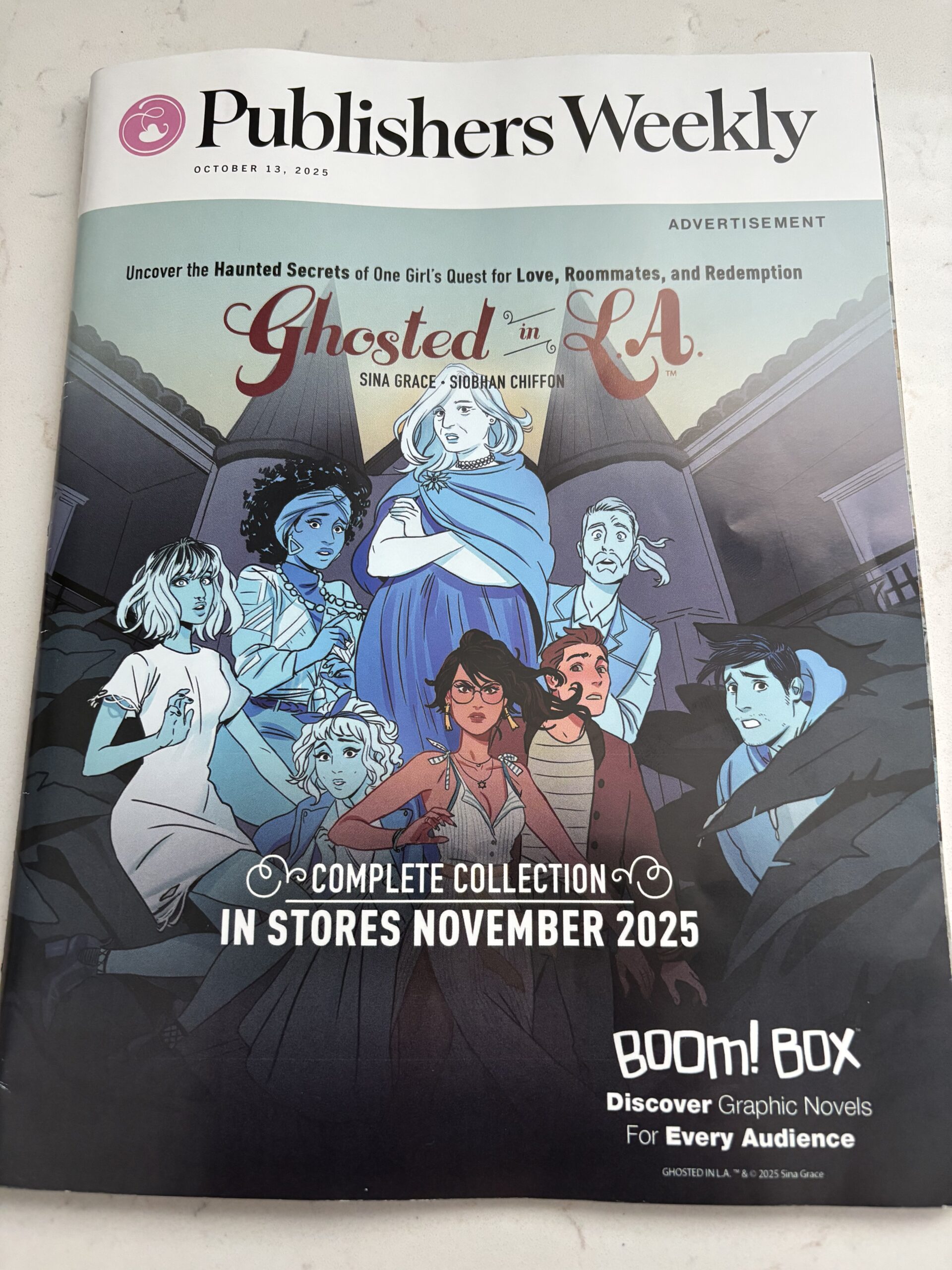
The Publishers Weekly Review of Vengeance Is Hers

This is a big deal for me.

Chute’s thought-provoking crime thriller tells the story of Molly Jergins, a bright, restless teenager who grows up in the small town of Poeticule Bay, Maine, a tight-knit, picturesque village floundering and long dominated by a single powerful family. When Keith Faun, the town’s hockey star and the son of its most influential businessman, brutally assaults a younger boy and escapes punishment, Molly finds herself consumed with revenge fantasies. Her petty pranks soon escalate into a campaign to drive the Fauns out of town: she sabotages their family business and publicly damages their credibility, with each act calculated to chip away not only at their sense of untouchability but also the broader community that enables it.

At its core, this novel is an exploration of the insular dynamics unique to small towns—blind loyalty to old families, unthinking hostility toward outsiders, and reflexive protection afforded to their golden boys. What stands out most are not the creative revenge sequences but the way cruelty is normalized: a principal who dismisses violence, a sheriff more concerned with reelection than law enforcement, neighbors who carry on like it’s business as usual. Here, Chute (author of Endemic) pushes readers to consider whether such institutions can really be trusted with justice—or if it falls to individuals to enforce it.

This ethical dilemma is embodied most clearly in Molly herself. While she obviously cares about fairness, her obsessive tendencies leave readers questioning whether she is driven by justice or simply by her power to deliver it. The story’s pace sometimes falters under the sheer number of revenge plots, with these convoluted sequences limiting Molly’s character development—but she remains a complex, morally gray protagonist who readers will want to follow, if only to see how far she will go. Overall, those who are drawn to dark small-town noir will enjoy the clarity with which this gripping tale examines power and complicity.

Takeaway: Dark small-town thriller examining the blurred line between justice and obsession.

Comparable Titles: Gillian Flynn; Paula Hawkins.

Available on Amazon.

The Best Book I’ve Heard This Year

When my kids were little, we watched iCarly together. I spent my non-house husband hours composing apocalyptic fiction, so iCarly was a nice break. It was a silly, cozy, comfort watch curled up with the children on the couch. My bailiwick is crime fiction and dystopian stuff, but there’s definitely a place for low-stakes stories where you know everything will work out fine. That feeling is tarnished now that we know the truth about the abuse and controversy on the Nickelodeon set. However, I’ve discovered a great authorial voice in the finding-out phase.

I’m Glad My Mom Died was published in 2022. I’m late to the party on this, but I just finished listening to Jeannette McCurdy narrate her amazing memoir. It’s a fantastic book: stark, funny by turns, sad and infuriating. Jeanette’s manipulative and abusive mother was a monster who forced her child into a life she didn’t want. The author became laden with heavy burdens that damaged her self-esteem, her relationships, and her health. It was so heartbreaking to see Jeanette do all she could to please and appease her stage mother from hell. No matter how hard Jeannette tried, Mommy could never be satisfied.

From the description, you might pass on a crushingly sad celebrity memoir. Don’t. This book deserves to be on your shelf. Better, listen to the audiobook. The author narrates I’m Glad My Mom Died herself, and her performance is superb. She doesn’t want to act anymore, but she is a great talent. Besides a compelling narrative, Jeannette McCurdy’s relentlessly honest voice will keep you riveted. The author has such a fine gift for observation. Her ironic juxtapositions of the profound and the mundane made me smile while I still had tears in my eyes. This child star’s story is a journey to self-awareness and understanding. In the beginning, she’s so innocent in the ways of the world. She matures into a such a sharp and witty person that you’ll think of Dorothy Parker at her breezy, quippy best.

You’ll be glad to know Jeannette’s memoir ends on a clear-minded and hopeful note. She has declared her acting career is over, but I sincerely hope her literary career has just begun.

Review: Can’t Hurt Me

Just finished reading Can’t Hurt Me by former SEAL, David Goggins.

This sums up David Goggins’ mentality pretty clearly: He took every failure as fuel for a win. To qualify for SEAL training, he lost 106 pounds in three months. Despite a serious lack of buoyancy and multiple ongoing injuries, he taught himself to swim and became an expert diver/underwater navigator in the SEALs. He suffered a fear of heights. Then he started jumping out of planes. He’s intelligent and accomplished. Or is he more crazy than intelligent?

The Bonafides

Goggins has had an amazing career both in the military and in endurance sports. Anyone who can endure two Hell Weeks in SEAL training and then go back for more is a tough person. When he could have taken a breather, he went to Army Ranger School. He ran marathons and ultramarathons, went through two heart surgeries, faced illness and got back to training ASAP. He broke the world record for pull-ups. He is an unusual person who developed mental powers to perform amazing physical feats.

Can’t Hurt Me, while a compelling and motivational read, is not going to be for everyone. No book is for everyone, of course, and this book is selling like crazy. I have to wonder how many people will rise to Goggins’ uncommon standards. With a few tweaks and refinement, his message might have reached more people.

The Good:

  • Toughen up, stop making excuses.
  • Goggins’ tragic childhood is a sad backstory and he’s candid about every struggle. Compelling reading.
  • Goggins is of the opinion that people generally think they’ve given their all when they’ve actually only expended about 40% of their potential effort.
  • His life will make you wonder how many great experiences you’ve passed on because it was too much effort to get off the couch.
  • His mom’s life story isn’t as outwardly dramatic as her son’s, but given where she ended up, she deserves a biography, too.
  • The challenges at the end of chapters are pretty good and will get readers interacting. Goggins believes we get prepared to deal with life by enduring challenges. His personal challenges generally involved suffering but others are about clear-eyed self-awareness, planning, and accountability. He encourages readers to take the lessons beyond physical training so maybe your challenge will be a new personal best in impressing your boss.

The Negatives

  • I was a book doctor on a motivational book last year. That audience doesn’t tolerate foul language very well so I cut back on its gratuitous use in the manuscript. Goggins, though a model of self-discipline in most areas of his life, can’t hold back on gratuitous swearing. Can’t Hurt Me is and will continue to be an amazing success. It could have pulled more sales if his editors had considered that many readers would have been repeat buyers if they could buy it as a gift for others. They won’t be able to get past it. Goggins’ writing partner made sure the book was written as the sailor talks. Unfortunately, in print, the constant repetition has a numbing effect. There’s no impact or meaning behind it. The swearing didn’t bother me personally. Characters in my books swear, too, but I mostly write SF, crime fiction and apocalyptic epics.
  • Similar to the above point, many readers aren’t going to take the misogyny lightly, either. There’s a subtext here that, in order to achieve, others must be pushed down. At Ranger School, he learned leadership skills that rose from empathy and teamwork. To his credit, Goggins admits he soon forgot that leadership lesson as soon as he graduated. I think his best moment was when he chose to finish a marathon with a brother SEAL side by side instead of smoking him. I have no doubt Goggins’ motives are pure and he’d be a better team player now. He wants readers to succeed.
  • Goggins often fetishizes pushing his physical limits beyond reason. I hope anyone reading his book who is in physical training has a coach with the brains to tell them when to hold back. Goggins does acknowledge the need for rest and recovery but it’s outweighed by the obsession with being tough, acting tough and looking tough in his quest for self-perfection. In the end, it’s to inspire others but for a long time his adventure was a very self-centered journey. After reading case after case of this man torturing himself, you have to ask: Is he tough or is he just a crazed masochist?

mas·och·ist
/ˈmazəkəst,ˈmasəkəst/
noun

a person who derives sexual gratification from their own pain or humiliation.
“the roles of masochist and mistress”
(in general use) a person who enjoys an activity that appears to be painful or tedious.
“what kind of masochist would take part in such an experiment?”

~ Citation from Google
  • Goggins is abrasive and admits he has a hard time making friends, so much so, it might have hurt his military career. (It might have been racism, too.) I can’t help but think Can’t Hurt Me would have been more effective if he’d worked on his interpersonal skills half as hard as he worked on pull-ups. (Read: Take David Goggins, titrate his personality so he’s diluted maybe 15% and you’ve got inspirational perfection.)
  • Goggins never seems to take much time to celebrate his many victories in the moment. He only seems to hold on to the happy memories as fuel to get him through the next beat-down. As soon as he breaks the world pull-up record (after three brutal attempts), he can’t wait to get out of there. He’s no quitter but he doesn’t seem to be a lot of fun to be with or have much fun. Last year I listened to Living with a SEAL on audio. The author hired Goggins to train him and toughen him up. Wandering through the world as a civilian, Goggins comes off as a pain in the ass immortal who finds himself in foreign territory among ordinary civilians. It was often quite funny. Living with a SEAL is a good book but I’m struck by one small anecdote. After his training was over, the author invited Goggins to a tropical resort. It might have been a fine vacation but Goggins spent the entire time in his room training on a bicycle! He didn’t even bicycle outside! Dude, stop to smell the roses once in a while!

That last point is key: This book may inspire you to do more but I doubt you want to live a life of pure suffering in order to prepare for life. To be comfortable in hostile environments (i.e. underwater), relax more. Sometimes I wished, for Goggins’ own sake and ours, that he would use that lesson more instead of furiously trying to dominate all the time. It’s an angry life.

What I got from Can’t Hurt Me

I had to have a talk with myself in the Accountability Mirror. I’ve been waiting on a medical test to find out if I’m facing a dire illness. It’s been a stressful couple of months as I make my way through the gauntlet of tests and sleepless nights. I’ve spent a lot of time worrying, eating too much, cocooning and feeling sorry for myself. Can’t Hurt Me has helped me get back on track. I still worry, sure, but I’m getting more done in the meantime.

  • I’ve been making needless excuses and I’ve been too comfortable doing so.
  • Trapped in victimhood and entitlement, I’ve been waiting, figuring I’m under stress now so after I get the good news, then I’ll get back to taking care of myself better.
  • I looked at my schedule and my productivity. Per Goggins’ suggestions, I began to strategize. I typically top out at writing three or four hours a day. I broke that up into two writing sessions, morning and late afternoon. That translated to six hours of writing time each day, a massive boost to my output.
  • I challenged myself to do 1,000 squats in a single day. It was a pure mental block on my part because, doing 50 or 100 reps at a time throughout the day turned out to be a fairly small challenge. I was intimidated by that big round number but when I actually committed to doing it, I was fine. I still feel it in my quads but the fix is easy: more squats!
  • Limits are real. They’re also self-imposed and often illusory. We only discover where that line is when we push ourselves to find our personal best. I’m not seduced by macho bullshit. I’ve already gone down that path. It was violent and lonely and I was constantly angry. However, I do see the worth in transcending that facade to get to the underlying value in Can’t Hurt Me: I’ve got to be real about my failures and commit to doing and being better.
  • Freaked out about the illness I fear, I looked in the accountability mirror and said, “It doesn’t matter what the next test says. That’s next week. Don’t wait. Do better for yourself now.”

This is Marketing: A Review

I’m getting a lot more out of Seth Godin’s This is Marketing than I expected. This author has a knack for taking complex ideas and boiling them down to their essence. Less a to do list than other books in his genre, this book breaks down quite a bit of how the world works.

I’m fascinated by the motivations behind people’s actions. Godin explores very interesting insights about why we are moved by hidden forces. (Well, maybe not “hidden” but largely ignored. )

Status, affiliation, dominance, inertia.

Our motivations are a complex mixture but Godin breaks it down so people’s actions are more understandable. How we see ourselves determines how we act. Yes, there is free will and we can each take control of our destinies. What would be the point of any business book if we couldn’t change course, do the unexpected and be contrarian? However, after reading Godin’s book I understand how unlikely that most people will change course. We are constantly asking ourselves, “Am I the sort of person who does this or that?” and “Who is my tribe?” We conform to our self-image.

Godin’s observations of human behavior explain a lot about the divisions in society and the arguments people get into. How could anyone be a liberal? How could anyone be a Trump supporter? The why of human behavior is all there. I’d like to see this book become required high school reading alongside To Kill a Mockingbird.

We often operate on unreasonable expectations. In general, we expect others to act as we would react. That’s because of a critical flaw in our programming: We expect others to know what we know and to act rationally. People aren’t rational. If rational arguments worked, we’d all arrive at the same conclusions given the facts.

To paraphrase Godin: Sonder is the empathy that arises when we understand that others have the same noise in their heads going on all the time, each with their own interior lives.

Though, we know this on some level, we obviously don’t organize our thinking, our society or our politics that way.

This is elucidating but it’s also a bitter pill to swallow.

This is Marketing provides familiar revelations. For instance, the market is so fragmented, we’re all joining smaller and smaller clubs. I knew that but I had not considered all the implications and what it meant to my little publishing company. Godin’s many points are so well articulated that I often found myself saying, I get that but I never really thought it through that far.

Conspiracy theorists identify with the underdog. If you tell a conspiracy theorist that most people agree with him, he is very likely to reject the theory he previously espoused. If 80% of people believe Elvis is still alive, that’s a disappointment. If only 19% refuse to accept the king is dead, you’ve made your conspiracy theorist friend very happy. Truth was never the point. Identifying with a subgroup was the cause. Navy Seals are an exclusive club that’s hard to get into. However, affiliation is easy. Whether we carry official membership cards or not, we’re all in a club and eager to conform.

There’s much more to this quick read. Godin talks about marketing failures, the fear of missing out and the folly of trying to please everyone. For an author, his take on book reviews is particularly compelling. There are interesting distinctions between the kind of book reviewer who says, “I like this,” or “I don’t like that,” versus the book reviewer who declares, “Everyone should like this,” or “No one should like this.”

The challenge of the book is to see the world the way it is and adjust our behavior accordingly. As I said, it isn’t a checklist. Godin is clear that he’s asking his readers to take a fresh look at their marketing strategy. Specific tactics will emerge from that new understanding. (I especially enjoyed how Godin pointed out the uselessness of traditional business plans.)

This is Marketing is a book to ponder, reread and digest. I have been averse to marketing my novels. All I wanted to do was swill coffee, be loved, live forever, write books and be found organically. That doesn’t cut it. Godin’s insights make me realize I have to come out of my shell. I have to find my ideal readers instead of hoping they’ll find me.

Understanding the forces that act on others left me less angry at people with whom I disagree. If you’re up to the introspection and taking action on new insights, This is Marketing might improve your position in the market and help your business. Best of all, reading this book might improve your life.

Highly recommended.

This is Marketing by Seth Godin

Book reviews: In case you didn’t know…

Sometimes when I review a book, I do a video review. Yes, you can do that on Amazon. For instance, yesterday I gave a review to Audiobooks for Indies by Simon Whistler. If you have the time, video reviews are great.

However, if you don’t have the time, a review doesn’t have to be an elaborate, divinely crafted time suck. Just a sentence or two saying you want to join the cult and have the author’s babies will do just fine.

Seriously, though, if you enjoyed a book, please do spread the word. That’s how the last book makes the next book possible.

For your consideration. Thanks! Now go have a great day, or make it a great day.

~ Chazz

REVIEW! INTERVIEW! MORE! YAY!: Sex, Death & Mind Control (for fun and profit)

I’m suffering a sore throat tonight, so I’m holding off on a new Self-help for Stoners Podcast for now. However, I still have candies for you! In lieu of me, press play to find out about one of my fave podcasts or just go to The Best of the Left.

Over at The Raven’s Quill, there’s an excellent review of Sex, Death & Mind Control.

CLICK FOR MORE SUSPENSE

(And by excellent, I mean, the author gets me, she really, really gets me…apologies to Sally Field for dragging out that old Oscars speech allusion.) Read Krista Walsh’s review here.

But wait there’s more! In a feature called Inside The Author’s Mind, I’m interviewed at Eden Baylee’s site and she asks such great questions that I’m forced to come up with some funny answers. Her site, and my responses, are definitely NSFW, 18+ and offensive to somebody. Somebody who doesn’t enjoy laughter. You’ve been warned. If you’re an adult, CLICK, READ, LAUGH.

I’ll be updating the Self-help for Stoners Podcast as soon as my throat recovers. I have fancy plans and pants to match (NEWSRADIO fans know that line). But seriously, I’m working on some huge and cool projects and, as soon as I can speak, all shall be revealed! Stay tuned. The podcast is going off in new and exciting directions.