Where are you taking me? Lessons learned.

Where the Night Takes Us is the first book in the Fear-Death Experiences series. It’s a thriller about Dr. Simon Fethullah, a retired FBI profiler stalked by the Rainy Day Cannibal. Rainy Day is in prison, but his reach goes far beyond the bars of his cell.

Early feedback has been great! The beta readers love it!

Note: Where the Night Takes Us is available for pre-order now at this link. The novel launches September 14th! The pre-order price is heavily discounted. And thanks! With a couple of clicks, you help me immensely.

Yesterday, I passed a big milestone on the path to publication.

I completed the manuscript for the sequel: When the Night Finds Us. This mystery/thriller begins with Simon, suffering fallout from the events in Where the Night Takes Us. When a villain runs him off the road, the good doctor is injured but intent on finding new purpose. He buys a big RV, hires a driver, and heads off to Texas with his faithful dog Stefano.

His mission: A girl has gone missing from Defiant, Texas. Find Willy Dupree, dead or alive. As his perception of reality blurs, Simon will have to find his way through the darkness and, maybe, back to the light.

I’m so happy with the story. It has heart and thought, twists and turns. I love all the sassy banter with Simon’s driver, Paloma Garrido, too. There’s action and mystery, but room for plenty of jokes, too. My final draft is off to my editor, the great Gari Strawn. I’m aiming to release this sequel by the end of October.

Thriller cover for the novel When the Night Finds Us


Lessons learned

  1. The previous two novels I’ve published, Vengeance Is Hers and Endemic, are big books. I wrote them that way because the stories I wanted to tell demanded room to move. Vengeance Is Hers, in particular, needed length because the instigating incident occurs when the heroine, Molly, is in high school. After a tragedy, she leaves the only home she’s ever known to try to leave her penchant for vengeance behind her. She grows up a little and tries to make a peaceful life. Her instinct to seek justice in her inimitable way leads her to lose her job in academia. With nowhere else to go, she returns to Poeticule Bay, Maine, after twelve years. When she discovers that the town has changed, but the villains haven’t, she slips back into revenge mode.

    When I discussed the book with literary agents, they had two concerns:

    (A) The age of the protagonist. Is this a young adult story? Is it contemporary women’s fiction? New adult? Molly goes from a teenager to twenty-nine, so what shelf in the bookstore is appropriate?

    (B) The length. At 114,000 words. Was it too long for the usual genre expectations?

    My answers: To point A, Vengeance Is Hers crosses genres. Point B, yeah, maybe so (but so what?)

    If I had to pick one category for VIH, I’d say New Adult, but my primary market is not bookstores. My sales platforms are mostly digital. By not heeding the agents’ cautions, did I hurt my book sales? No. Online sales platforms are search engines. There is no shelf. There is metadata, keywords, descriptions, and the cover. That’s what sells it.

    Besides, the VIH story I wanted to tell required that length. To serve readers best, a better story demanded I write against industry expectations.

    Lessons learned: Not all advice is for everyone all the time. Consider good advice from well-meaning experts. Reject advice when it feels constrictive, dated, or simply not for you. Follow your heart. No regrets.

    BONUS: And take heart! The publishing industry is, in many ways, a complete mess right now. If you’re forging your own path, you’re in great company.

    2. Not fitting into a box is not what hurt the sales of Vengeance Is Hers. I did.

    I focused on the writing, not the marketing. VIH is considered excellent by those few who have read it. However, I was impatient. It had been a long time since I’d published Endemic, and I was concerned I’d been forgotten by my readership. Too eager to hit the button, I basically tossed VIH out there without priming the pump by letting more people know it exists. There are so many books published each day that it’s very easy to disappear in the book marketplace. That’s more and more true each day with the flood of AI slop books.

    Lesson learned: Hope, history, laurels, a few ads, social media posts, and newsletters are insufficient. We must advertise and nurture sales as if the book’s a flightless baby bird in the nest. I write great novels. (Hey, false modesty is false!) But anemic marketing is the equivalent of an opera singer belting out beautiful arias in a soundproof room.

    So what’s next, Rob?

    For Where the Night Takes Us, I’ve engaged BookSirens, Booksprout, and Itsy Bitsy Book Bits to find reviewers. I’ve sent out advance reader copies. I’ve completed fresh research, and there’s yet more to do. I’ve experimented with ads and taken more book marketing seminars. I have someone lined up to help me promote When the Night Finds Us.

    I’ve proven myself great at plotting. Now I have to engage in more planning. Do I enjoy the marketing end of the publishing business? Not really. I didn’t always enjoy selling other people’s books when I was a rep for several publishers. However, I sold millions of dollars’ worth of books to stock bookstores across Toronto and Cottage Country.

    I love writing. I love entertaining readers. It’s unreasonable to expect to enjoy every aspect of your work. To find readers, I have to promote. I can’t hide in the blanket fort forever with only my keyboard to keep me warm. And so, to market, to market.

    (Hint: If you do enjoy every aspect of your work, keep it to your own damn self, weirdo!)


    3. About Shiny Keys Syndrome
    Working on the Fear-Death Experiences Series, I got back in touch with an edict I’d almost forgotten: Commit to one path and don’t be too precious about getting the words down.

    It is so easy to suffer Shiny Keys Syndrome. Ideas are cheap, but it’s the execution that takes so much time. I do not use generative AI, and I’m not a great typist, so I go slow.
    Along that long road, it’s easy to get distracted by the latest brilliant epiphany for a different book. I often wake up with inspiration in the morning or the middle of the night. Instead of looking away from my work in progress and listening to the siren song of those jangly keys, I stay the path, hold the line, and keep working on the book I’m already writing. So many ideas, so little time! If only I were immortal, or at least nigh-immortal.

    To ensure that I don’t wander off like a toddler at the fair, I’m keeping better track now. Each day I record what I accomplished and what I plan to do tomorrow. All in shorthand, my notebook is part diary, part tracker, and all encouragement to keep my energy up and the momentum moving forward. Being a novelist is fun, but at its core this is still work. It’s a job, and jobs require attention, purpose, focus, and showing up consistently.

    Final thoughts

    Track your progress, because that which is not measured is not improved.
    Show up.
    Keep going. Maintain momentum.
    Do what you have to do, even the stuff that’s not comfortable.
    Peace and prosperity may be your aim, but getting there won’t be without speed bumps.
    Too much comfort is a trap.
    Explore options and don’t be intimidated by what you are comfortable with. For instance, running ads can be confounding, but confidence doesn’t come before the task. Confidence follows the work.


    Vengeance Is Hers and Endemic are available on Amazon and these fine stores:

~ Have we met? I’m Robert Chazz Chute, blanket fort dweller, achy-ass cyclist, erstwhile Nova Scotian, graduate of journalism school and the Banff Publishing Workshop. Fifteen-time writing award winner, I’m also a raging hypochondriac who rages against the night. I pen apocalyptic epics with heart and suspenseful thrillers with brains and muscle. Since writing the Fear-Death Experiences series, I’ve become a huge fan of Cane Corsos like this guy:

Cane Corso dog.
Stefano, the helpful Cane Corso doggie.


Spider-Noir, Reviews, and What’s Next?

There is a line from Spider-Noir that I found especially fun. Do I need to add spoiler alert here? Relax. It’s memorable, but minor.

A guy comes to a PI’s office asking him to follow his wife to catch her cheating. He shows a picture of said wife to the PI (played with great glee by Nic Cage). This woman is absolutely gorgeous. The PI looks back and forth from the picture to the man. Sorry, but he’s not gorgeous, and that’s the point.

With perfect, world-weary delivery, Nic asks, “Are you a wealthy man, sir?”

“No.”

“Possessed of a keen wit?”

(Close-up on the not-gorgeous man’s face.) Baffled, he answers, “Huh?”

It’s a small moment, but it is funny. Good acting. Solid writing.

I sometimes wonder about character actors, though. How do those casting calls go? “Hey, uglies, we got a role for ya!”

And what about the very elderly cast as the soon-to-be dead in medical dramas? Do these actors call up their children and grandchildren and say, “The casting director took one look at me and said, ‘No makeup needed! You look half-dead already! I’m on the next season of The Pitt!”

It’s brutal. Or maybe it just acknowledges the vicissitudes of life (and death). What self-confidence they must have! Or self-acceptance. Or devotion to and love for the art? Are they mentally healthy? Is it simply the desperate need for a paycheck?

Given what I do, I should understand the impulse better. After all, I get book reviews. Most of my reviews are happy ones from satisfied readers. I go back and read those occasionally when I feel down. Some days, those keep me going.

The nasty ones, though? I don’t have to return to. I remember them verbatim. Like the reviewer who, several times, wrote, “Fluff you, Chazz!”

That person obviously meant, “Fuck you,” but her intent was undermined by her twee use of the word fluffing. As a euphemism, it’s not the threat she thinks it is.

Then there was the guy who wrote, “I see this author is Canadian. I certainly hope he stays there.” No worries, mate. I wouldn’t dream of coming anywhere near you. Book reviews aren’t a venue for personal attacks. Don’t fight me. Fight with your family at the dinner table like you usually do.

(In case you missed it, I’m not telling anyone what kind of review they should write. I’m merely saying what shouldn’t be controversial: Don’t be an asshole.)

This morning I saw an Instagram post from an author who made an interesting observation. Thoughtful critiques and bad reviews are part of the deal. But what’s with those reviewers who don’t like any book? They review plenty, but the ratings they give never rise above a one or two-star. The Instagram author asked, “Why do you read? It seems like you don’t enjoy it at all.”

Maybe some mean reviewers are jealous writers. (Of course, it’s entirely possible they could be right some of the time, too.) Or perhaps, as the popular saying goes, “The cruelty is the point.”

Some reviews feel performative, an attempt to demonstrate vast intellectual superiority. Like this gem: “Well, actually, the black plague was great for the average European peasant.”

Tee-hee. What fun!

If a book has zero negative reviews, it hasn’t reached a wide audience. Plenty of people who were never the target demographic are eager to decree, “This book is the end of literature,” or a similar maximalist claim. Too few people say, “It’s not for me.” Too many say, “I didn’t enjoy this and no one else should, either.”

No matter, though. I persist. Maybe I can relate to those character actors. I keep going because this is not just my job. It’s my purpose. Publishing can be scary, but the day-to-day of the writing life is fun. In daring to try to entertain others, I am entertained. I focus on writing the next book, what happens in the next paragraph, and polishing the next line.

Anybody who tries to do anything will encounter Negative Nellies who don’t know how to express themselves constructively. Or they’re just mean. The failure is not found in falling short of pleasing everyone. The failure is in not continuing to try.

To creators and doers everywhere:

It’s okay.

You’re okay.

Keep going.

Next is a powerful word.

~ I’m Robert Chazz Chute, your friendly neighborhood suspense writer. My next two thrillers come out in September. In the meantime, I’ve got plenty of novels and collections for you to read and (I hope) enjoy. Send your thoughts, feelings, and death threats to expartepress@gmail.com


Vengeance Is Finally Everywhere

My latest thriller!

A while back, I reevaluated the business side of my publishing experience. For most of my backlist, Amazon was no longer delivering. There are many variables to what makes books hit or miss. I’ve gone into detail about that before, so I won’t belabor that again here.

So I made a move, quite literally.

Most of my books are no longer exclusive to Amazon. You’ll still find them on Amazon, but you’ll also find them on book sales platforms across the planet. Think library services like Overdrive, and publishing platforms such as Kobo, Tolino, Barnes & Noble, and Gardners.

I have also added Vengeance Is Hers to a newish sales platform I’d only discovered recently. Laterpress is one way authors can sell their work directly. Check out Vengeance Is Hers on Laterpress here.

Vengeance Is Hers (and many more can be found on these services.)

Enjoy!

It’s hard to sell a book, and getting harder

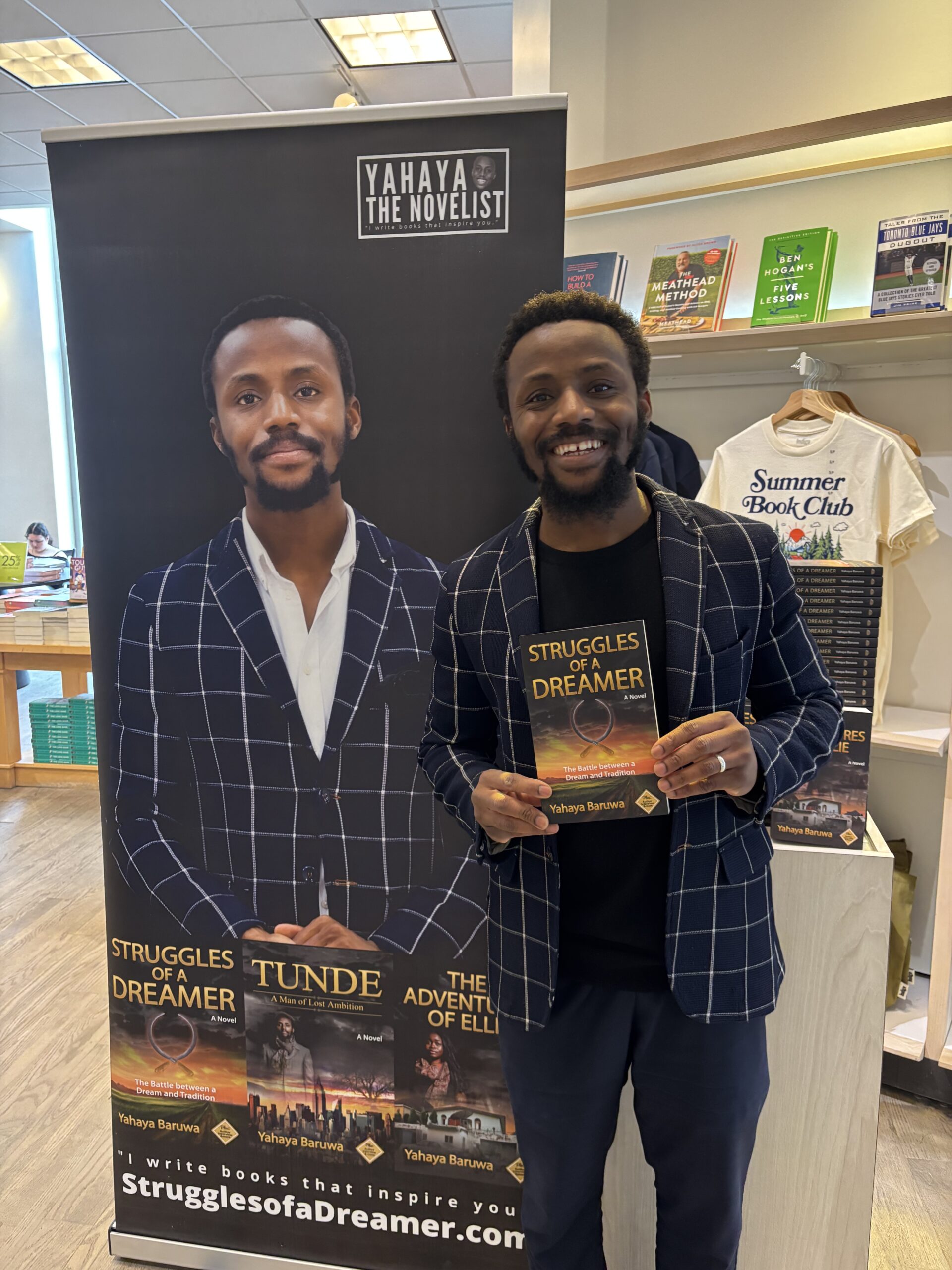
Selling books for a living is hard. At Chapters Indigo, I met Yahaya, who was selling his novel, Struggles of a Dreamer. It’s a sugary mix of Chicken Soup for the Soul and The Richest Man in Babylon.

Yahaya, author of Struggles of a Dreamer

As shoppers passed by, he humbly asked, “May I tell you about my book?” That takes a lot of guts and time, and I respect the effort. Nice guy. I bought a signed copy.

Yesterday, I joined the Crime Writers of Canada. (Huzzah! It was long past time I got around to that!)

This morning, their first missive to me was a newsletter announcing, among others, the best crime novel set in Canada. Salt on Her Tongue looks great! I was immediately intrigued because I grew up in Nova Scotia, seven miles from the Bay of Fundy.

But here’s the rub: Published in June 2025, the novel has but one review on Amazon.ca. (Canucks, stand up!) Alas, no reviews on Amazon.com.

Best Crime Novel Set in Canada

Sponsored by Shaftesbury with a $500 prize

C.S. Porter, Salt on Her Tongue, Vagrant Press

Animated by the intense fog and turbulence of the Bay of Fundy, as well as the personal struggles of the varied characters who take the reader on this gripping journey, Salt on Her Tongue keeps the reader engaged through masterful pacing and startling revelations.

The jurors pointed in particular to how well the author evokes the geography, maritime life and weather that forms the setting, and how well it amplifies the conflicts and mysteries in the plot. Also, the characters, from salty locals disdainful of big-city practices to wealthy and powerful elites, are drawn with a clarity that brings them to life, making the reader see their unique perspectives. Notably, the detective’s self-awareness of her mental fragility helps the reader see inside her head, empathizing as she persists despite barriers, including that the people around her seem to be trying to hinder her investigation. Further, the scope of the plot is engaging, convincingly telescoping from local corruption to an unexpected plot twist sure to leave readers satisfied.

Looks great! But sadly, not visible enough. (Yes, I’ll be getting a copy. I’ll check my local bookstore today.)

Re: Marketing

I’ve been in this position, and it’s uncomfortable.

Vengeance Is Hers has been out a year and has stalled at five reviews in the States and seven internationally. I admit, I didn’t launch it correctly. I simply tossed it out there, sent some emails, and posted a few ads, hoping it would catch readers’ eyes and Amazon’s algorithms. Alas, that was not to be.

I love Vengeance Is Hers, but what does my love for my work matter when it comes to the book marketing side of the publishing business? People who read it tend to enjoy it a lot, but few have read it.


As I prepare for the launch of the new series, Fear-Death Experiences, I’m going at it differently. I’m looking into engaging a publicist, Booksprout, and a launch service with Reedsy. I’ll set up a pre-order as we hunt for more readers interested in getting advance review copies.

Meanwhile, Amazon has changed its review filters, probably in response to receiving false reviews, reviews written by AI, and too many AI books. If a book gets too many reviews all at once, for instance, the AI reviewer might flag the reviews for deletion. Way to go, Amazon. In your quest for more organic reviews, you’ve made it harder for authors to reach readers. The same wave floods all boats.

This is one of the reasons I’ve taken most of my catalogue wide. You’ll find most of my books are no longer exclusive to Amazon. Draft2Digital has my work on library services and book platforms everywhere now. (Kobo, Barnes & Noble, Tolino, you name it).

Whatever the struggles of writing and publishing, I persevere. It requires time, talent, persistence, business smarts, and stupid, blind optimism. It’s no great burden. It can be very frustrating, but I love the writing life.

Social Media Priorities and the Trouble with TikTok

First, a quick update, because you have to eat your meat before you get your pudding.

November was a very productive month for me. I’m flirting with a repetitive strain injury with all the time at the keyboard, but it’s really paying off. I participated in the ProWritingAid Challenge (the replacement for NaNoWriMo) and finished the first draft of my next thriller. It’s about a retired FBI forensic psychiatrist whose past comes back to haunt him. I’m plowing through the second draft now and loving it. More on that in the new year.

This fall, I started up the Vocab Menace Series, putting out videos every day. I LOVE WORDS! I love learning their origins and playing with ideas and I’ve had a lot of fun with it. I will continue, but not every day.

Evaluating Social Media

For years, I posted regularly on my writing blog (ChazzWrites.com). That was helpful early in my publishing career. I connected with some wonderful authors and made allies. Eventually, I decided it was best to consolidate my posts on my author blog and only post when I had something new and trenchant to say.

I found that posting everywhere (Bluesky, YouTube, Threads, Instagram, LinkedIn, Medium, Substack, TikTok, and the Book of Faces) takes a lot of time. Not all those platforms are worth the energy I invested.

My impressions of the usefulness of social media platforms (your mileage may vary):

I find the user interface for Bluesky and Threads unfriendly. The people are nice, but the platforms are not where they need to be yet. Discoverability is an opaque enigma wrapped in a burrito of mystery.

YouTube is good. Eventually, YouTube might pay me actual money.

One of the most active content categories on Medium is writing. Put that in your keywords, and people will look. Medium’s interface is cool, but following and connecting with people there is probably more useful than dedicating too much time to post every day. Because they are so alike, I feel similarly about Substack. I’m posting less on Medium now, more on Substack.

I’m not looking for a job or writing business books, so LinkedIn is a waste of time and energy.

I like Instagram. As a news source, I find many of the creators I follow there provide thoughtful commentary.

For the authors out there, BUT WAIT! THERE’S MORE!

As for Facebook, you can have a lot of followers, but your audience is far too throttled. They want you to pay to have your content seen. There are many ways it’s problematic. However, I connect with my inner circle of readers there.

I enjoy Facebook for my fan page and hope they never delete it. That happens sometimes, and when it happens, you probably won’t even know why. As a writer hoping to sell my work, it’s always best for me to have my own platform that can’t be ripped away.

The trouble with TikTok

TikTok has really fallen in terms of usefulness and tone. I used to be addicted to political debates there, but my favorite content creators left the platform. Others are competent, but very repetitive. Mostly, the live debates are angry people talking over each other. (Oh, and don’t forget the racist trolls. Lots of those.)

TikTok is a special case in some ways. BookTok can be great, but is often repetitive, covering the same few books (read: rarely mine). Also, some of the BookTok drama is ridiculous.

I would pursue book promotion there more avidly, but things are about to change for the worse. If you’re a Canadian author, sending review copies to the United States is expensive. To complicate things further for non-American authors, TikTok will soon become a walled garden, for the United States only. The details on that change are muddy, but when that happens, I won’t be able to reach my American readers through that platform. (That’s a shame. Most of my readers are from the United States.)

Conclusions

  1. When my American readers can only see other Americans on TikTok, the platform’s value will plunge even further.
  2. Between the forest of TikTok-friendly language and the suppression of posts meant to appease political actors and the new owners, TT’s once robust foundation will eventually sink into the shifting sands of irrelevancy.
  3. Unless another app rises in TikTok’s stead, the change in ownership will benefit Instagram.
  4. LinkedIn is for business. Not my business, though.
  5. If you post for self-expression alone, enjoy using whatever platform you like.
  6. From a time management perspective, don’t invest too much energy trying to post everywhere. It’s a lot to keep up with, and the juice isn’t worth the squeeze.
  7. For gaining visibility and leverage social media platforms, follow and engage with people you enjoy.
  8. Authentic engagement has more value than solely sending out signals.
  9. Agents and publishers are obsessed with follower count. They shouldn’t be. Follower count means much less than engagement.
  10. Social media is free to use for book promotion, but you get what you pay for. Author Jason Pargin posts excellent content. He has said that even with all his followers, that work does not translate significantly to a greater readership.
  11. There are plenty of book marketing strategies out there. Some gurus push complicated flow charts of funnels. They all enthuse about newsletters. Some content creators make money from sharing “the newest trick.” The solution to selling books may be going direct, going wide, learning how to advertise (and funding it), keyword optimization, consistent branding, or some combination of all of the above, plus something else. Answers abound, but social media alone surely isn’t the cheap, easy solution.
  12. You can’t make a viral video happen. Others choose that for you. I’ve gone viral once, but only because I made a lot of trolls angry. TikTok hid a lot of the nastiest comments because “the collapsed comments could be detrimental to your mental well-being.” Ha! As if my mental well-being was all that great to begin with! I could see the threats, and I had a peek. I just had to click on them to see the tidal waves of crash-outs.

    My question: If the platform’s AI detects mean messages suggesting harm to me, why doesn’t the platform ban those trolls?

    The hullabaloo hardly mattered in the end. The experience did lower my estimation of my fellow humans, but I didn’t respond to the trolls much. Arguing with fascists who are determined to be idiots is the ultimate waste of time. Always preserve your peace (between the punching Nazis thing, I mean).

    On reaching readers:

All social media platforms suppress your signal to some degree.

To break through all the noise requires time, talent, energy, editing, and savvy marketing. Consistency is paramount, but only if you have the time and energy. As much as I love posting Vocab Menace content, it was cutting into my writing time. To get the next book out, protect that time. Prioritize productivity.

My writing time and energy is paramount to me at present. That much is working. My next thriller will be released early in 2026. That’s a concrete achievement I can measure.

~ REMINDER: Buy your books for Christmas now so you can read them before you wrap them for others. Happy holidays!


FYI: All my work is available on Amazon. Endemic is available everywhere.

How to Spot a Book Promotion Scam

Every day, another book marketing scammer hits our inbox. Lately, it’s two a day. The basic pitch is almost always the same. It goes like this:

1. We came across our book (Endemic, This Plague of Days, Vengeance Is Hers) and it is…

2. Insert a long, flattering, and flowery description of the book here. There’s enough detail, you’d almost think they read my work. What they’ve actually done is scrape social media and book reviews for their pitch.

3. The pitch is to market my work to their secret group of 2,000 readers or to their book club. Another variation is to act as a book marketing coach with all strategies conveniently provided by ChatGPT. (Sometimes they pretend to be a famous author who loves your books and is eager to pass on the name of their book promoter to help you out.)


Spot a Scammer

The first thing you may notice is that the grammar and syntax miss the mark. The sender’s first language is not English. That alone is not disqualifying, of course, but it’s not a good sign if they intend to market English books for you. When I turned down a chancer, they asked, “Why? Do you think I am scam?” (SIC)

The less sophisticated emails are more generic, and the template they’re using for mass emails is evident. (e.g. “I just ran across your excellent novel <<title of book>> by <<Author>>.)

For some reason, the name of the book promoter is often two feminine first names. Sarah Sally is excited to read and sell your book for you!

Like any author, I need more reviews of my books. Several times, I’ve been approached by someone whose marketing plan would contravene Amazon’s terms of service. So, they get money, and I lose my account and livelihood? Great! For them.

More Tip offs

The salutation says, “Hi Author Robert!”

They have no website and no or very low presence on social media.

Their email is a generic Gmail address. (e.g. bestbookmarketing.au.bookbar.uk@gmail….)

They impersonate a real book marketer from a reputable company, but when you go to the real person, the contact info doesn’t match. When that happens, I let the impersonated person know.

HOT TIP #1: Always research by going to the source directly. Do not click a link within an email.)

In the past couple of days, I’ve received offers for deals on their book promotion for “the festive season.” It’s already December 3. A little late to pull together a helpful book marketing campaign for Christmas, isn’t it?

Some scammers are persistent to the point of aggression, sometimes even harassment. When I ignored one particularly relentless scammer, I suddenly got a one-star rating on my latest book. Can I be sure it was the suitor I rejected? No, but the timing was suspicious, and it hurt because the book has, as yet, so few reviews. After that, instead of ignoring scammers, I opted to reply with a polite but firm, “No, thank you.”

It’s exceedingly rare for authors to get approached for something they didn’t sign up for. Real book promoters simply work with authors who come to them, not the other way around. That stipulated, I have had a few entreaties from real agents, publishers, and book promoters. When that happens, I have to look at them really hard before I can take them seriously. That’s part of the problem.

The Danger

A new one this morning came very close to getting me. The pitch was good, but the sourcing didn’t pass. Anybody (including authors) can plug a prompt into ChatGPT and get the same book marketing advice as the scammers do. These people aren’t adding real value. The trouble authors face is not having the budget to overcome the noise. Getting a signal through to actual readers and reviewers is difficult.

Beyond wastes of time and money and the damage to the environment, these AI scam pitches harbor a deeper danger. They poison our media environment. AI hallucinations and deep fake videos erode trust. With the newest gizmo, Nano Banana, you can’t trust anything you see. I loved images from the James Webb telescope, but stopped sharing them because I couldn’t tell what was real, what was enhanced, and what was fake.

If an honest-to-goodness pitch comes along, it’s become an act of self-defense to treat all information with a skepticism that devolves to easy cynicism. If there’s clear video evidence of a politician doing something heinous, they’ll dismiss it with “It’s just AI!”

Can’t write a book on your own? Flood the zone with prompts to an AI that yields trite, soulless regurgitation.

When you use your media literacy and critical thinking skills, the scammer replies, “Who are you going to believe? Me? Or your lyin’ eyes!”

Writing for a living is hard. Waving away the gnats would be a minor strain were it not for their ubiquity.

HOT TIP #2: When in doubt of a sketchy email, check it out. Writer Beware has a searchable database to check out the names and reputations.

Author’s Crashing Out is Great Drama (but what can I do?)

You know what authors used to do to promote their work before the internet era? They toiled, mostly in obscurity, and if they were lucky, their publisher put them on tour to bookstores. Lucky ink-stained wretches sometimes got on big media (back when media wasn’t social). Some fiction writers even got on TV!

If you want some more joy in your life, watch old YouTube vids of author nonsense. For instance, here’s the great Truman Capote.

Or witness Norman Mailer versus Gore Vidal!

It’s different now.

The last time a fiction author made it on to a major TV spot was Jon Stewart’s interview with Kurt Vonnegut. He was a great sci-fi author, but he only made it to air because (a) he was about to die, (b) he had a lot of brilliant observations, and (c) he’d just published his non-fiction book, A Man Without a Country.

These days, with our fragmented attention and millions of distractions, authors are pretty much screaming into the darkness. We hope to be heard about our fiction, but our voices are muffled under Reality’s onslaught.

So what do we do now?

When the great exodus from X happened, a plethora of other platforms rose up to compete. Bluesky is fairly popular. I’m on there (@robertchazzchute.bsky.social‬), though I have mixed feelings about its functionality. Thing is, there is no single destination for social media attention.

One commentator suggested a simple solution: Be everywhere. That was well-meaning, but if I were everywhere on social media, when would I have time to write the next book? I can’t be everywhere. I don’t have the bandwidth. Who does?

That said, I need to be available in more places, so I started up on Substack. This move is not about monetization, at least not for a long time. It’s about sharing more, spreading the word to new readers, and curated ubiquity.

I’d probably get more views if I engaged in high drama like Truman and Norman, but I’ll opt for engaging with readers in a more sane way.

Today, on Substack, I wrote about The Terrible Dread. If you dig it, please do subscribe.

https://robertchazzchute.substack.com/subscribe

You’ll also find me on Medium. Plenty of fun to read on my profile here.

Oh, before I go, let’s not forget this scream into the darkness. I just launched Vengeance Is Hers!

This is not a guide for aspiring vigilantes, but it might inspire you!

Welcome to Poeticule Bay, Maine, a village where justice is scarce, and secrets have deadly consequences. When a gay student is brutally attacked and exiled from his home, the police turn a blind eye. Fueled by rage, Molly Jergins launches a relentless campaign against the school bully and his sinister family.

As Molly’s quest for retaliation spirals into chaos, the lines between hero and villain blur. To hunt monsters, must she become the very thing she despises? In the end, will revenge prove the best success?